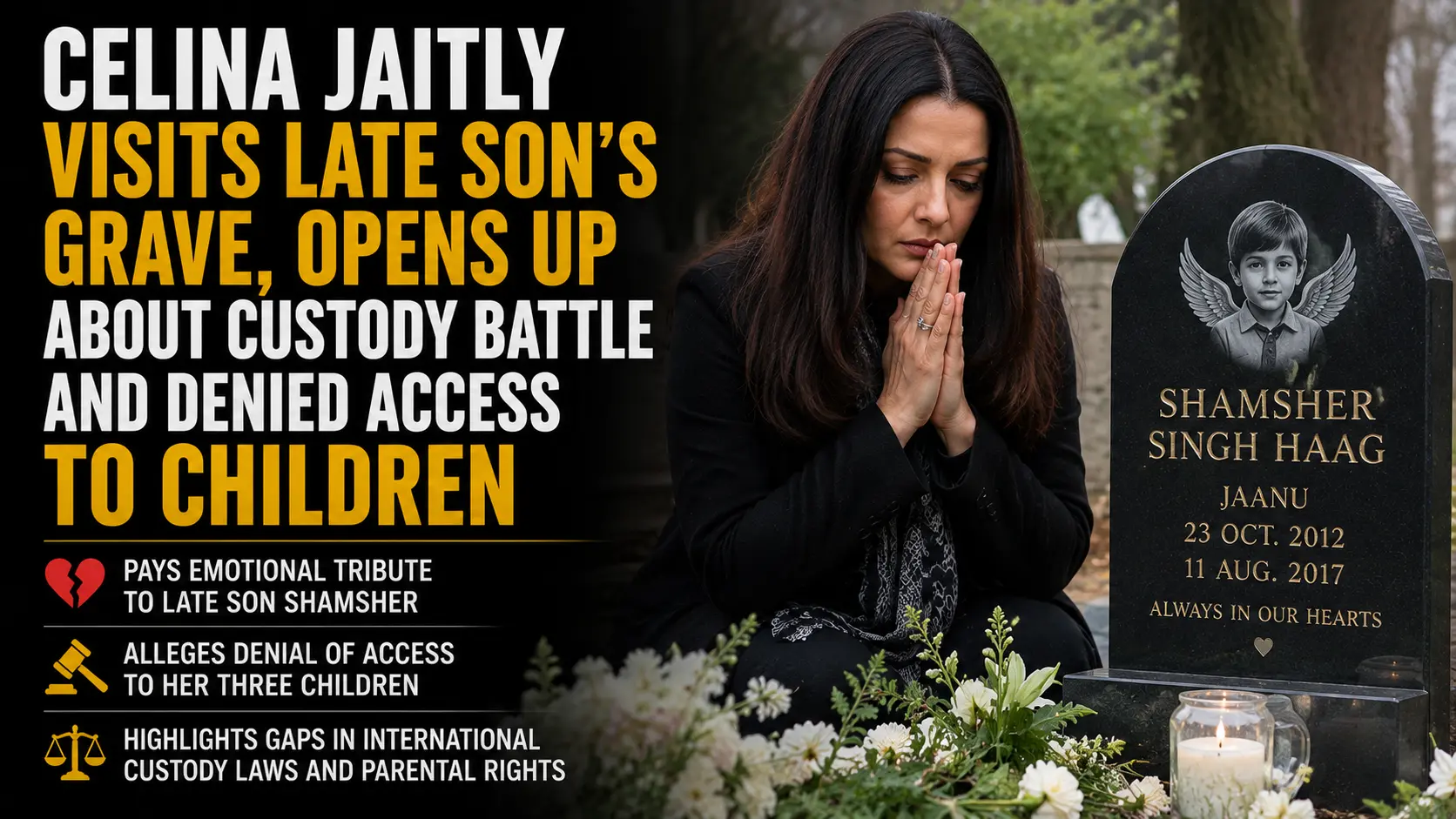
Bollywood actress Celina Jaitly's emotional journey through grief and legal turmoil has taken another heartbreaking turn as she visits her late son Shamsher's grave while simultaneously battling what she describes as denial of access to her living children. The former beauty queen shared an intimate and raw video on Instagram, documenting her visit to her infant son's final resting place, while pouring out her anguish over the ongoing custody disputes that have become the dark underbelly of her divorce proceedings with husband Peter Haag.
Understanding Celina Jaitly's Personal Tragedy and Current Legal Struggle
Celina Jaitly lost her son Shamsher to a congenital heart condition when he was just an infant, a loss that left an irreplaceable void in her life and fundamentally altered her trajectory as a mother. The tragedy became even more layered when her marriage to Swiss-based businessman Peter Haag began deteriorating, eventually leading to a bitter divorce battle that has stretched across international borders and legal jurisdictions. For Indian readers following celebrity news, Celina's story represents more than just Bollywood gossip—it touches on critical issues around parental rights, international custody laws, and the often-overlooked emotional toll on mothers caught between grief and legal warfare.
What makes Celina's situation particularly complex is the geographical and jurisdictional complications involved. Her three living children are reportedly in Switzerland with Peter Haag, while she has returned to India amid the custody dispute. Despite claims of joint custody arrangements, Celina alleges she has been systematically denied access to her children—a claim that raises serious questions about how international family law protects maternal rights when parents reside in different countries. The emotional weight of visiting Shamsher's grave while being separated from her other children illustrates the multidimensional pain she endures.
What Happened: Timeline of Celina Jaitly's Custody Crisis and Recent Developments
Celina Jaitly's public revelation about her custody struggles emerged through a lengthy and deeply personal Instagram post that left many followers moved to tears. She described the trauma of motherhood being weaponized against her in the legal proceedings, where access to her children has become a bargaining chip in divorce negotiations. The actress did not mince words about the psychological impact of being separated from her kids, particularly while managing the ongoing grief of having lost one child to a medical condition beyond anyone's control.
The timeline of events reveals a pattern of escalating tensions. Celina initially maintained relative privacy about her marital issues, but as the situation deteriorated and access restrictions tightened, she began speaking out publicly—a decision that reflects the desperation many parents feel when traditional legal channels appear to have failed them. Her visit to Shamsher's grave and the subsequent social media post marked a turning point in how openly she would discuss her family's internal struggles.
Key developments in Celina Jaitly's custody and divorce battle include:
- Celina Jaitly alleges she was denied access to her three children despite having joint custody arrangements with Peter Haag
- Her late son Shamsher succumbed to a congenital heart condition while still an infant, a tragedy that continues to haunt her maternal journey
- The custody dispute spans two countries—Switzerland (where the children reside) and India (where Celina returned)—creating jurisdictional complexities in resolution
- Celina publicly shared an emotional video visiting Shamsher's grave, revealing the intersection of her unresolved grief and current separation from her living children
- She described feeling unable to protect her children or ensure their wellbeing from her current location, raising questions about enforcement of custody orders across borders
- The actress framed her public statements as necessary to highlight systemic failures in protecting maternal rights in international custody cases
The Broader Impact: What This Reveals About Parental Rights and International Family Law in India
Celina Jaitly's case illuminates a critical gap in how international family law operates in the Indian context. While India has increasingly engaged with global custody frameworks through bilateral agreements and mutual legal assistance treaties, enforcement remains inconsistent and often favors the parent with greater economic resources. When a mother like Celina returns to India and her children remain abroad, the Indian legal system has limited leverage to compel compliance from foreign parents or courts. This structural disadvantage disproportionately affects Indian mothers in cross-border marriages, making stories like Celina's not merely celebrity scandal but a window into systemic vulnerability.
The emotional and psychological dimensions are equally significant. According to multiple interviews and statements, mothers separated from their children through custody disputes experience depression, anxiety, and a sense of helplessness that extends far beyond the public narrative of "divorce drama." In Celina's case, the compounding trauma of having already lost one child creates a uniquely devastating scenario where she is grieving both her son's death and her separation from her living children. Her willingness to speak publicly about this—despite the potential legal and social consequences—has resonated with thousands of Indian parents in similar situations, elevating her from being merely a celebrity figure to becoming an inadvertent spokesperson for parental rights awareness in India.
What Comes Next: Legal Pathways and Future Expectations
The trajectory of Celina Jaitly's case will likely involve escalated legal intervention at both the Indian and Swiss levels. International custody cases increasingly rely on the Hague Convention on International Child Abduction, a treaty designed to prevent parental kidnapping and ensure that children are returned to their country of habitual residence for custody determinations. Whether Celina will invoke these mechanisms or pursue alternative dispute resolution remains to be seen, but her public statements suggest a growing frustration with conventional legal channels. Going forward, Indian readers should watch for developments in how Indian courts respond to cross-border custody claims and whether precedents set in high-profile cases like Celina's could influence future policy.
For those following this story, the key takeaway is that international custody disputes demand specialization, patience, and often significant financial investment. Parents in similar situations should consider consulting family law attorneys experienced in cross-border cases early in the process, rather than waiting until conflicts escalate to the point of separation. Celina's willingness to share her journey, though painful, has created valuable awareness about these issues in Indian society—where international marriages are increasingly common but legal frameworks remain inadequate.
Frequently Asked Questions
What is the legal status of Celina Jaitly's custody case with Peter Haag?
Celina Jaitly claims joint custody of her three children with Peter Haag but alleges systematic denial of access. The case involves jurisdictional complications across India and Switzerland, with no publicly announced final resolution as of her recent social media statements. The legal proceedings remain ongoing.
How did Celina Jaitly's son Shamsher die?
Celina Jaitly's infant son Shamsher died from a congenital heart condition. She has spoken about the devastating nature of losing him while still unable to do anything medically to prevent his death, a trauma that continues to define her maternal experience and grief journey.
Can Indian courts enforce custody orders against parents living abroad?
Indian courts can seek international cooperation through mutual legal assistance and treaties like the Hague Convention, but enforcement depends on whether the foreign country recognizes the Indian order. Direct enforcement is limited, making international custody cases particularly complex and requiring specialized legal strategy.
Why did Celina Jaitly return to India if her children are in Switzerland?
Celina returned to India as part of her divorce settlement and personal relocation, though exact details of her decision remain private. Her return has complicated access arrangements, creating the situation she now publicly describes as denial of parental access to her living children.