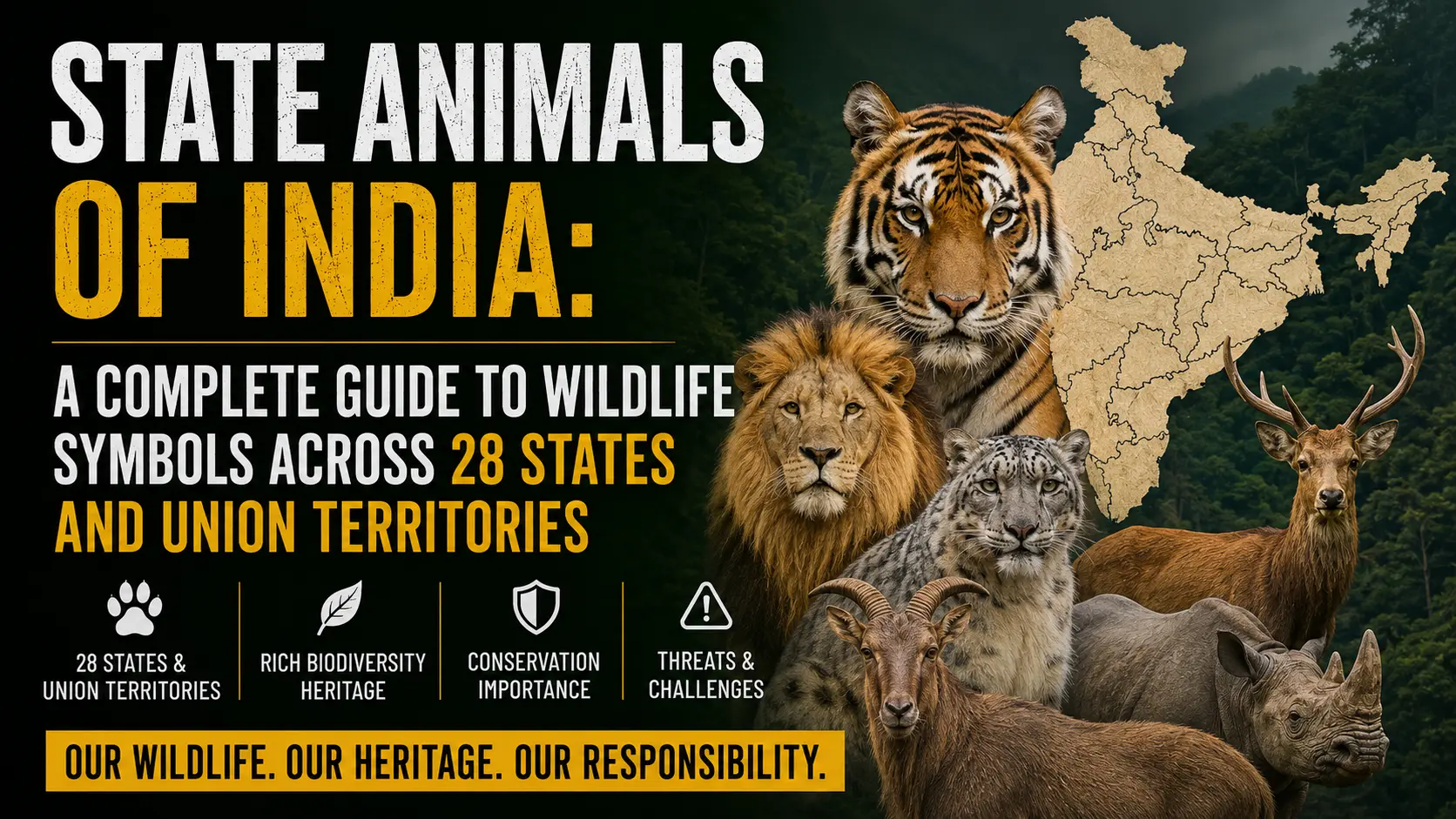
Every Indian state and union territory has adopted an official animal as a symbol of regional pride and ecological identity—yet most citizens couldn't name more than a handful. From the majestic Bengal tiger of West Bengal to the endangered Nilgiri tahr scaling the Western Ghats, these creatures represent far more than mascots; they embody conservation mandates, cultural heritage, and biodiversity hotspots that define India's natural landscape. Understanding the state animals of India reveals the remarkable diversity of wildlife thriving across our subcontinent and the urgent conservation challenges each region faces.
Why State Animals Matter: Conservation and Cultural Identity in India
When India's states officially designated wildlife symbols in the mid-20th century, the underlying strategy was both political and ecological. These declarations weren't ceremonial exercises—they were deliberate attempts to spotlight endemic species that needed protection, habitat restoration, and public advocacy. By assigning an animal to represent a state, policymakers created a psychological connection between citizens and their regional fauna, fostering a sense of ownership and responsibility for conservation efforts.
The cultural dimension runs equally deep. A state animal becomes woven into local identity, appearing in educational curricula, government emblems, and tourism campaigns. When a Gujarati child learns that the Asiatic lion roams the Gir Forest within their state, it instills pride in regional natural heritage. Simultaneously, these symbols serve as ambassadors for endangered species—drawing attention and funding toward protection programs that might otherwise remain underfunded. Some animals, like the blackbuck, serve multiple states, reflecting shared ecosystems and migratory corridors that transcend political boundaries.
The Complete List: Mapping India's 28 State Animals and Their Habitats
India's 28 states have each claimed a distinctive animal representative, though several species appear as state symbols in more than one region. The geographic spread and ecological range of these animals is staggering—from snow leopards in the Himalayas to marine species in coastal regions. Each selection reflects the unique biogeography and conservation priorities of that state. The Nilgiri tahr, for instance, is the state animal of Tamil Nadu and was chosen specifically because it exists nowhere else on Earth except the Nilgiri Hills, making it a flagship species for that region's conservation identity.
The diversity of choices reveals how India's biodiversity varies dramatically across latitudes and altitudes. What thrives in Kerala's tropical forests would never survive Himachal Pradesh's alpine meadows. By selecting animals that genuinely inhabit each region, states created a living map of India's ecological zones. This wasn't random selection—forest departments, wildlife experts, and state governments invested considerable thought in choosing animals that were either endemic, critically endangered, or culturally significant to local communities.
- Andhra Pradesh & Haryana: The blackbuck (Antilope cervicapra), an elegant antelope once hunted to near extinction, now protected under India's wildlife laws with populations recovering in protected reserves.
- Gujarat: The Asiatic lion (Panthera leo), survivor of a population bottleneck with fewer than 50 individuals a century ago, now numbering over 600 in the Gir Forest—a conservation triumph.
- Himachal Pradesh & Jammu & Kashmir: The snow leopard (Panthera uncia), the elusive high-altitude predator symbolizing India's commitment to protecting the world's most threatened big cat.
- Maharashtra: The Indian giant squirrel (Ratufa indica), a massive tree-dwelling rodent with striking orange and black fur, endemic to the Western Ghats region.
- Tamil Nadu: The Nilgiri tahr (Nilgiritragus hylocrius), a critically endangered wild goat found only in the shola forests of the Nilgiri Hills, with fewer than 3,500 individuals remaining.
- Arunachal Pradesh: The mithun or gayal (Bos frontalis), a semi-domesticated bovine known as the "cattle of mountains," integral to tribal culture and subsistence economies across the Northeast.
Beyond these examples, states like Goa chose the gaur (Indian bison), the largest wild bovine in Asia, while coastal union territories recognized marine species, acknowledging that India's wildlife extends beyond land. Some animals like the Indian elephant appear as state symbols in multiple regions—Kerala, Karnataka, and Odisha all claim this gentle giant, reflecting its cultural and economic importance across South and Central India.
The Conservation Reality: Challenges Facing India's State Animals
Designating an animal as a state symbol sounds meaningful until you examine the ground-level conservation picture. Many state animals face existential threats from habitat loss, poaching, and human-wildlife conflict. The Indian giant squirrel of Maharashtra faces severe forest fragmentation as Western Ghats ecosystems shrink under agricultural and developmental pressure. The Nilgiri tahr survives in tiny, isolated populations vulnerable to disease and genetic bottlenecks. Even the celebrated Asiatic lion, despite its recovery, remains confined to the Gir Forest—a single protected area means one disease outbreak could devastate the entire population. These animals are not thriving simply because they hold official status; conservation success requires sustained funding, scientific research, community engagement, and political will that often lags behind symbolic declarations.
According to wildlife experts, approximately 40% of India's state animals are classified as vulnerable or endangered by conservation organizations. The snow leopard, though iconic, faces mounting pressure from climate change altering its alpine habitat and livestock depredation driving human-wildlife conflict in the Himalayas. The blackbuck, despite legal protection, remains threatened by poaching and agricultural expansion in its historical range. These gaps between symbolic importance and actual conservation outcomes highlight a critical reality: naming an animal as a state representative is merely the beginning, not the culmination, of protection efforts. Real conservation requires habitat protection, anti-poaching enforcement, research stations, and community involvement—resources that stretch thin across India's states.
What Readers Should Know: Engaging with India's Wildlife Heritage
Understanding your state's official animal is more than trivia—it's a gateway to deeper ecological awareness. When you learn that Kerala's state animal is the Asian elephant, you're prompted to consider how human settlements encroach on migration corridors, creating conflict. Knowing that Goa's gaur roams protected forests raises questions about sustainable land use and tourism management. Many states now leverage their animal symbols in educational programs, eco-tourism initiatives, and wildlife awareness campaigns, creating opportunities for citizens to engage meaningfully with conservation. Organizations like the Wildlife Institute of India and various state forest departments run citizen science programs where ordinary people contribute to monitoring and protection efforts for their regional animals.
For those interested in deeper involvement, visit state forest department websites, join wildlife conservation NGOs working in your region, or participate in habitat restoration projects. Several state animals have recovery programs you can support—the Project Tiger initiative protects multiple state animals, while specialized programs focus on species like the Nilgiri tahr or snow leopard. By connecting with your state's animal symbol, you're not just learning about wildlife; you're entering a conversation about India's ecological future and your role in it.
Frequently Asked Questions
What is the complete list of state animals of India?
India's 28 states have designated official animals ranging from the Bengal tiger (West Bengal) to the mithun (Arunachal Pradesh). Several animals represent multiple states—the blackbuck serves Andhra Pradesh and Haryana, while the Indian elephant is claimed by Kerala, Karnataka, and Odisha. State animal symbols were established to give endemic and endangered species special attention and conservation priority.
Which state animal of India is the most endangered?
The Nilgiri tahr of Tamil Nadu ranks among the most critically endangered, with fewer than 3,500 individuals surviving in isolated Nilgiri Hill populations. The snow leopard of Himachal Pradesh and Jammu & Kashmir faces severe threats from climate change and habitat loss in alpine regions. Both species require intensive, ongoing protection programs to prevent extinction.
How many state animals are there in India?
India has 28 state animals—one for each of the 28 states recognized in the Indian Union. Additionally, several union territories have designated their own animal symbols, though some territories share representatives. Some animals, like the blackbuck and Indian elephant, represent multiple states due to overlapping geographic ranges and shared conservation significance.
Why did India choose state animals for each state?
State animals were designated to generate public awareness and conservation support for endemic, threatened, or culturally significant species. These symbols create emotional connections between citizens and regional wildlife, foster pride in natural heritage, and direct conservation resources toward protection programs. They serve as educational tools and ambassadors for biodiversity awareness across India.
Are India's state animals successfully protected?
Protection levels vary significantly. The Asiatic lion's recovery in Gujarat's Gir Forest demonstrates success possible with dedicated management, while many other state animals remain under severe threat from habitat loss, poaching, and human-wildlife conflict. Symbolic designation alone doesn't ensure survival; sustained funding, research, and community participation are essential for meaningful conservation outcomes.