Modi in Netherlands: Semiconductors, Water Tech, and Why This Matters for India
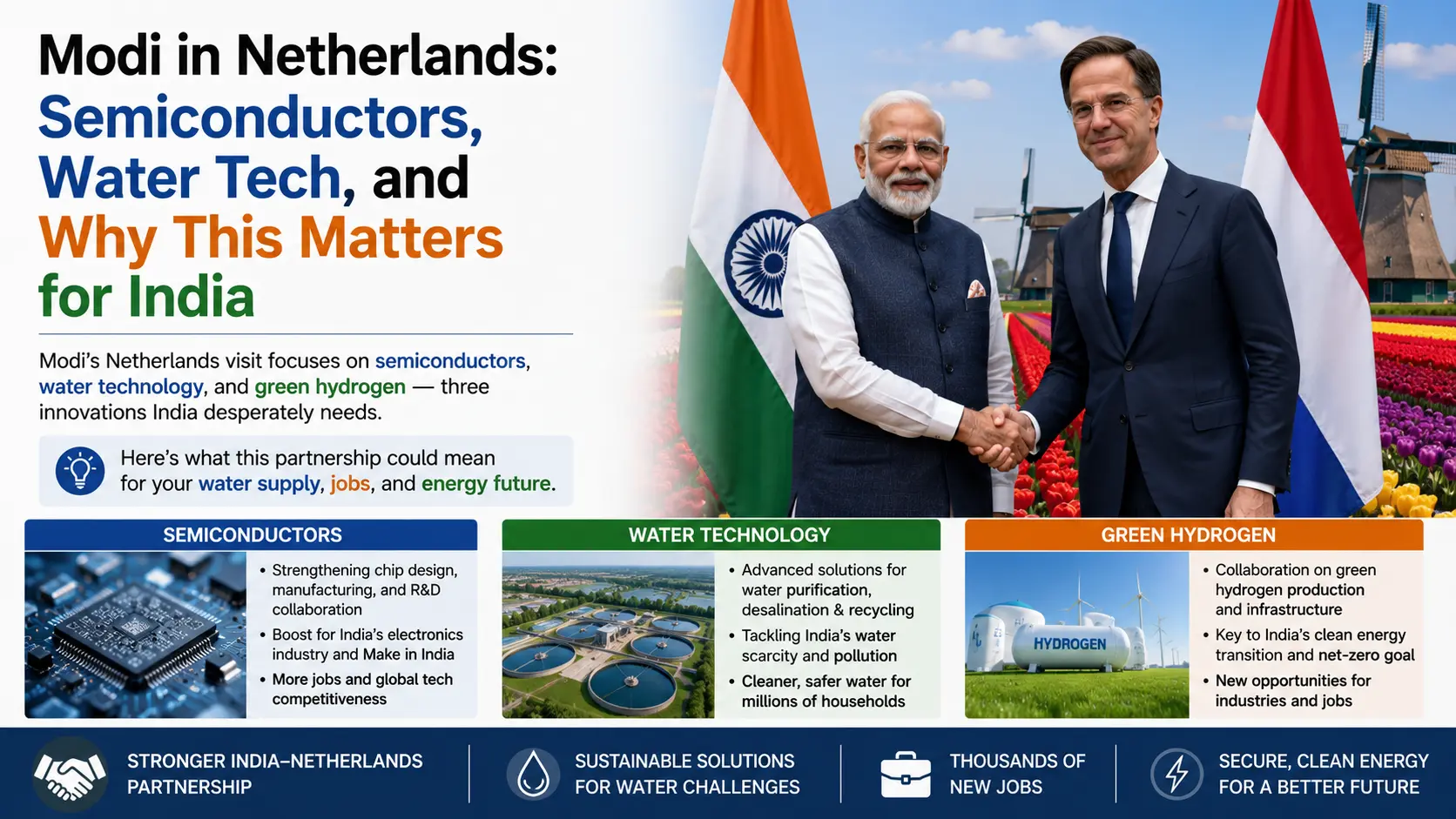
Prime Minister Narendra Modi just landed in the Netherlands on the second stop of a five-country tour — and honestly, this isn't your typical diplomatic visit full of handshakes and fancy dinners. No joke. This visit is about getting India access to technologies that could change how we manage water, build computer chips, and power our future. That's real. Modi will sit down with Dutch Prime Minister Rob Jetten, meet King Willem-Alexander and Queen Maxima, and address Indians living there, but the real story is about semiconductors, water management systems, and green hydrogen. And why does this matter right now? Because the Netherlands is basically the world's expert at three things India desperately needs to master.
- Modi's three-day Netherlands visit focuses on semiconductors, water tech, and green hydrogen—game-changing tech for India's future economy.
- The Netherlands is a global leader in chip-making equipment and water management; they've mastered what India's just starting to learn.
- This is about technology transfer and partnerships, not just polite meetings. India's after their expertise, pure and simple.
- Water management is critical since so many Indian states face severe water stress. The Dutch? They've already fixed this problem.
- Semiconductors matter because India wants to reduce dependence on foreign chip imports; right now, we're too reliant on places like Taiwan.
- Green hydrogen could become India's next energy revolution. It's far cleaner than coal, and the Dutch know how to produce it on the cheap.
Why the Netherlands? A Country That Solved Problems India Is Just Starting to Face
And here's why that matters.
Here's the thing about the Netherlands — it's a tiny country, barely 42,000 square kilometers, but it punches way, way above its weight in technology. Think about it. They've turned themselves into the world's biggest exporter of advanced chip-making equipment and built water systems so efficient they can farm on land that should be underwater. And more. And they're leaders in renewable energy, especially green hydrogen.
Big shift.
And India? We're still catching up. Right now, India imports most of its semiconductors, and when it comes to water management, we lose nearly 50% of our water through leaks and bad infrastructure. That stings. And our energy sector's still heavily dependent on coal, which pollutes cities and harms public health.
So when Modi meets with Dutch officials, he isn't asking for charity; he's asking for a seat at the table. Period. He wants Indian companies to learn from Dutch companies and he wants technology partnerships. Key point. He wants access to knowledge that took the Netherlands decades to build.
And that's just the beginning.
What's Actually on the Table? Breaking Down the Three Big Tech Areas
So let's get specific about what Modi and Prime Minister Jetten will actually discuss. Facts. These aren't abstract ideas — not by a long shot — because they affect real Indians. Right?
- Semiconductors and chip manufacturing: Look, the Netherlands doesn't make chips itself, but it controls the machines that make chips everywhere else. Companies like ASML (headquartered in the Netherlands) build the equipment that Taiwan's TSMC and South Korea's Samsung use. India wants to build its own chip-making capacity, and we need Dutch partners to do it. Right now, there are only a handful of advanced chip fabs (manufacturing plants) in India, and we're way behind.
- Water management systems: And India faces one of the world's worst water crises. Groundwater is disappearing. Cities face seasonal shortages. The Netherlands has cracked the code on efficient water use — they recycle it, purify it, and distribute it without massive losses. For a country with 1.4 billion people and growing water stress, this knowledge is worth billions of rupees.
- Green hydrogen production: So hydrogen's being called the fuel of the future. It burns clean, produces only water vapor as waste, and could replace diesel and natural gas. The Dutch have already built pilot projects. If India can master green hydrogen production at scale, we could export it to Europe and reduce our dependence on fossil fuels at home.
- Agricultural technology: The Netherlands feeds 17 million people on farmland slightly larger than Delhi, and they export food to 180 countries. They use precision farming, drip irrigation, and greenhouse technology that produces 10 times more per acre than traditional farming. Indian farmers could benefit massively from these techniques.
- Renewable energy infrastructure: Wind, solar, and now green hydrogen. The Dutch have been investing in renewables since the 1980s. India's catching up fast, but we can move faster with Dutch help.
- AI and technology research partnerships: Both countries are investing heavily in artificial intelligence. There's potential for research collaboration between Indian tech companies and Dutch universities and firms.
Notice something? Every single one of these hits a real problem India's facing right now. That's the truth. Water shortages are hitting farmers and cities, and power demand just keeps growing. And now? We need more jobs in manufacturing, not just IT services.
Think.
What the Experts Are Actually Saying About This Visit
And this isn't happening in a vacuum; India and the Netherlands have been building ties for years. Let that sit. But Modi's visit signals something important — a huge shift, actually. Big deal. India's treating the Netherlands as a serious technology partner, not just another European country to visit politely.
Look — government officials in Delhi say the focus is on “strategic cooperation,” which is just code for long-term partnerships that benefit both countries. Huge. From the Dutch side, companies see India as a massive market (1.4 billion people) and a manufacturing hub where they can scale up production. Worth it. But who really benefits here?
Period.
And here's what's fascinating: the Netherlands is tiny, but its companies are global. Wild. If ASML or a Dutch water-tech company partners with India, that partnership could reach 1.4 billion people. The result? For the Dutch, that's huge business; for India, it's access to knowledge we'd otherwise take decades to develop ourselves.
There's one more angle, too — geopolitics. Yep. Both countries are concerned about the rise of protectionism in global trade, so by deepening tech ties, they're signaling to the world that they believe in cooperation, not isolation. Not small. And that really matters in 2025.
The kind of thing most people miss.
How This Actually Affects Indians Like You
Let's be direct — most people reading this won't ever meet Modi or any Dutch officials. And? So how does this actually matter to you? How often do you see something like this?
If you're a farmer: Better irrigation technology means less water wasted, more crops grown on the same land, and potentially a higher income for your family. Think about it. Dutch drip-irrigation systems are being tested in Punjab and Maharashtra right now, and if this partnership deepens, more farmers will get access to them.
If you work in tech or manufacturing: More partnerships with Dutch companies could mean a ton of new jobs in India. And that's big. Chip fabrication plants need thousands of workers—engineers, technicians, quality-control specialists. Read that again. If India attracts semiconductor manufacturing investment (which this visit aims to do), those are high-paying jobs. Is this really a surprise?
If you live in a water-stressed region: Cities like Bangalore, Mumbai, and Delhi face brutal water crises every single summer. No joke. Better infrastructure and smarter water management could mean your taps don't run dry. Big deal. That's not trivial — it's your quality of life.
If you care about climate change: Green hydrogen could eventually replace diesel trucks and coal power plants, which means cleaner air, especially in our cities. Unreal. Right now, Delhi's air quality kills thousands of people every year through pollution. Let that sit. So this green energy technology could actually save lives.
If you're worried about India's energy bills: Currently, India spends tens of thousands of crores importing oil and coal. That stings. Green hydrogen, if produced cheaply, could cut that import bill significantly over the next 10-20 years, freeing up money for schools, hospitals, and roads.
So yes, this visit matters — but not because Modi is shaking hands with a European king (that's just the photo op part). Nobody talks about this. It matters because the partnerships being discussed could reshape how India produces energy, grows food, and manages its most vital resources.
Wow.
What Happens Next? The Timeline That Matters
Worth paying attention to.
But this visit is just the announcement. And now? The real work starts after Modi returns to Delhi.
So first, Indian and Dutch officials will finalize the agreements, but these won't be signed during the visit itself (that'd be too simple) — they'll be negotiated over weeks and months. Not anymore. You'll see statements about “memorandums of understanding” (basically formal agreements to work together) coming out over the next two months. But here's the real question — what happens next?
And second, Indian companies will start exploring partnerships. Key point. If you read about a partnership between an Indian semiconductor company and a Dutch firm in the next 6-12 months, just remember — this visit planted that seed.
Then third, money will move; India will likely announce investment into Dutch companies or vice versa. Big shift. These deals take time, but they're the ones that create jobs and technology transfer.
So what should you watch for? Any announcement about Indian semiconductor manufacturing facilities getting Dutch equipment or technical support. Facts. Any news about water-management projects starting in Indian cities, or any partnerships announced between Indian and Dutch energy companies focused on green hydrogen. True. These will be the real indicators that this visit created concrete results.
But not for the reasons you'd expect.
Frequently Asked Questions About Modi's Netherlands Visit
Why is Modi visiting the Netherlands specifically? Don't they just grow tulips?
Good question. The Netherlands is tiny but a tech giant. They're the world leader in semiconductor equipment (think ASML), water management, and green hydrogen. India desperately needs all three, which is why Modi is there.
What is green hydrogen and why does India need it?
Simply put, green hydrogen is a clean fuel made using renewables like solar or wind. It burns without pollution, producing only water. India needs it badly because our energy demand is soaring, our cities are choked with pollution, and fossil fuels won't last forever. The Netherlands has mastered producing it cheaply, so a partnership lets India skip years of R&D and scale up much faster. It's a huge strategic move.
How could better water technology help ordinary Indians?
Here's the short version: India wastes about 50% of its water. The Dutch lose barely 5%. Adopting their tech—smart irrigation, recycling, and leak detection—means more water for farms and cities without building new dams. No more dry taps in summer.
Will this partnership create jobs in India?
The thing is, yes, but over time. If India successfully attracts semiconductor manufacturing, that means thousands of high-paying jobs in fabs, research, and logistics. It's not just about assembly lines. Likewise, green hydrogen projects require skilled engineers and technicians, and upgrading our water infrastructure will create countless jobs in construction and management. These are the quality jobs India needs for the next decade.
When will Indians actually see the benefits of this partnership?
Look — agreements will likely be signed in the next few months, with the first projects starting within a year. But the real, large-scale impact like new city water systems or common green hydrogen? That's a 5-10 year timeline. Government projects are slow, but they scale big.
The Bottom Line: Why This Visit Matters Beyond the Headlines
The numbers don't lie.
Look, Modi's Netherlands visit isn't about pageantry, though there will be plenty of that. That's the truth. It's about India positioning itself as a serious player in global technology competition and solving the real problems — water, energy, semiconductors — that affect how Indians live.
And the Netherlands is small, but it's a master class in efficiency and innovation. Read that again. India's large, but we're still learning. The result? This partnership is India saying: “We want to learn from you, and we have 1.4 billion potential customers and workers to bring to the table.” Think about it — when was the last time this happened?
So watch the news over the next few weeks, and look for announcements about new semiconductor projects, water-management initiatives, or energy partnerships. And? Because those will be the real measure of whether this visit created lasting change or was just more diplomatic theater.