India's 200+ Chutneys Finally Get Their Own Book — And It's a Game Changer
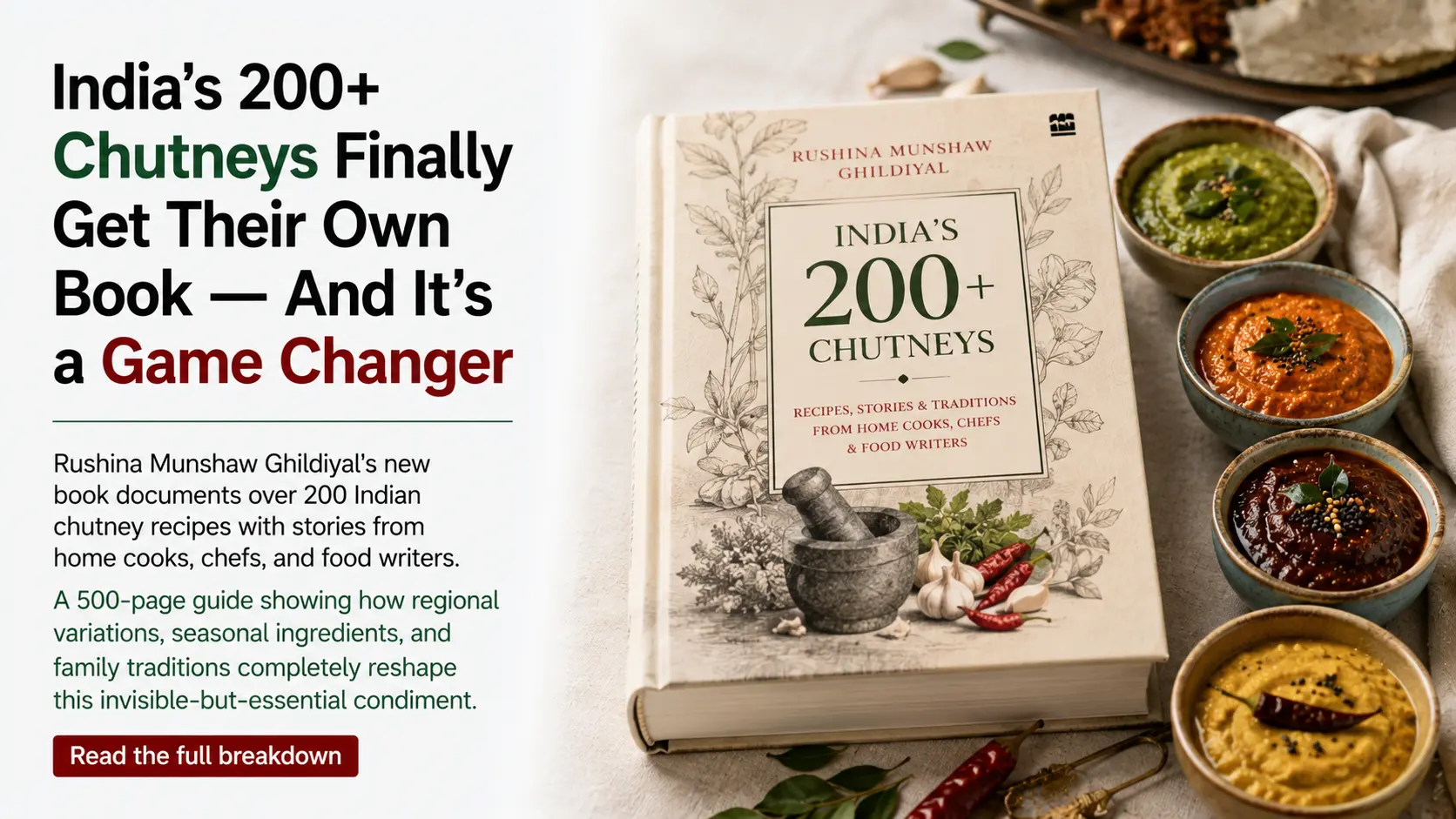
Rushina Munshaw Ghildiyal did something nobody else bothered to do—she sat down and actually documented India's chutney obsession, all 200-plus varieties of it. Wow. The result? A massive 500-page book that reads less like a recipe manual and more like a love letter to every chutney your grandmother ever made. No joke. Over 100 home cooks, restaurant owners, and food writers contributed their personal stories, family secrets, and regional takes on what might just be the most important condiment in Indian kitchens.
Here's the thing that surprised everyone—we've written hundreds of books about Indian cuisine, but almost nobody has ever bothered to tell chutney's actual story. Think about it. It sits on the side of your plate every single day—at breakfast with dosa, at lunch with samosa, at dinner with everything—yet it's been invisible on the page. Not anymore.
- Rushina Munshaw Ghildiyal's new book is a landmark, documenting over 200 chutney recipes from across India—with input from home cooks, professional chefs, and writers.
- It's a massive 500-page hardcover that costs ₹3,500, and for the first time, it maps out regional chutney variations many people haven't even heard of.
- You'll see how things like Bengal bharta, Tamil chokas, and Maharashtrian chutneys demonstrate the condiment's wild diversity based on local ingredients and geography.
- The food writer deliberately resists a single, rigid definition, because what "chutney" means changes from one home to another—it can be anything from a mash to a fresh paste.
- A key insight is that every season has its own specific chutney; monsoon, summer, and winter bring different ingredients suited for what the body needs.
- And finally, the book is packed with personal family stories, not just recipes, highlighting the deep connection between chutneys, memory, and culture.
Why Nobody Has Done This Until Now
Indian food writing—and let's be honest—has always focused on the big dishes like curries, breads, and elaborate rice preparations. Right? Everyone wants to talk about butter chicken or biryani because those are the showstoppers. And chutney? It's been treated like the sidekick, the supporting actor that doesn't deserve a spotlight scene. But who really benefits here?
Maybe that's because chutney is just so humble; it doesn't announce itself with a lot of noise. True. You don't need fancy techniques or expensive ingredients to make it—just a grinding stone or a mortar, some vegetables, spices, and your hands. Period. Your grandmother made it without measuring anything. Your mother still does. But the moment it left Indian homes and appeared on restaurant menus and supermarket shelves, something changed. Suddenly chefs wanted to standardize it, define it, box it up neatly. Rushina refused to do that. And where does that leave the rest of us?
“I resisted settling on a codified definition of what chutney is,” she explained, and this is a critical point. Key point. This matters because the second you try to define chutney officially, you're actually excluding dozens of regional variations that don't fit your definition. Big deal. Bengali bhartas and chokas aren't technically called chutneys, but they're made the same way and serve the same purpose. So why shouldn't they count? This flexibility—this refusal to be rigid—is what makes the book feel real.
The kind of thing most people miss.
Wow.
What Actually Made It Into the Book
So, over a hundred people gave Rushina their chutney stories—and we're not talking just recipes written on recipe cards, but actual memories. That's real. Nani's Til Tamatar (sesame-tomato chutney) became the inspiration for a curated lunch menu at a restaurant. Think. Think about that—one family chutney became important enough to feature on a restaurant menu, not because a chef invented it, but because it was documented and given its proper respect.
- The regional variations are massive. Seriously. A chutney from Kerala tastes nothing like one from Punjab, and that's totally different from one in Karnataka. This book finally puts them all in one place.
- And then there are seasonal chutneys. Every meal has a chutney, and there's a chutney for every season, depending on what monsoon or summer brings to the table.
- No two families make it the same way. Your neighbor's recipe is probably different from your mom's, which is different from your grandma's. And that's okay. In fact, that's the point.
- It works with literally everything. You can spread it on paratha, use it as a dipping sauce, mix it into rice, or just eat it plain. The uses are endless.
- The flavor range is huge, from fiery garlic to sweet mango. The book covers everything from intensely hot garlic chutneys to sweet, fruit-based ones, showing you the full spectrum.
- And the stories matter just as much as the recipes. You get to learn *why* a family makes it a certain way, for what occasion, and what it means to them. It's personal.
Look, this isn't just some recipe book where you look up ingredients and instructions—it's way more than that. And more. This is a book where you read about a grandmother's chutney and finally understand why her family will never use any other recipe. Let that sit. Even if someone else's version is objectively “better.”
And here's why that matters.
Period.
Why This Actually Matters for You
Here's the real thing—if you're an Indian who loves food, an Indian student curious about your own culture, or just someone trying to understand why your family cooks the way it does, this book is for you. That's the truth. So what does this actually mean? And why does this matter right now?
Let's face it, most Indian food writing comes from outside India, written by outsiders trying to explain our food to the world. And? That's fine for some things. But chutney is too personal, too local, too much a part of home cooking for that approach to work. Facts. Rushina's book works because it comes from inside—from people who actually eat these chutneys every day, who have memories attached to them, who know exactly how their grandmother's hands moved when she ground the spices.
For someone learning to cook, this matters because you won't just find the “right” way, but every single regional variation. Huge. If you're curious about food traditions, you'll see how geography, season, and family history completely reshape the same basic condiment. Unreal. And if you're someone who felt disconnected from your own food culture—maybe because you grew up eating store-bought chutney and thought that was normal—this book proves there's a deeper, richer world waiting for you.
The book costs ₹3,500, which is definitely expensive for a cookbook. Worth it. But consider this: it's not just a cookbook. It's a documentation of food culture that should have been recorded generations ago. And that's big. It's proof that what happens in ordinary Indian kitchens matters enough to be written down, photographed, and preserved.
But not for the reasons you'd expect.
Think.
What This Tells Us About Indian Food Right Now
This book exists for a reason—and that reason is more important than you think. Big shift. Let that sit.
Over the last decade, Indian food has gone international, which is great for restaurants and celebrity chefs. And now? But it also means that as Indian food gets standardized for global audiences, the small, local, household variations are just disappearing. That stings. Kids grow up eating jarred chutney instead of fresh-ground. Families skip making it from scratch because it's “easier” to buy. Regional recipes get forgotten because nobody wrote them down.
So Rushina's book is a direct response to this trend. Yep. It's basically saying: “Wait. Stop. Before we lose all of this, let's document it.” Read that again. And not in some cold, academic way, but through stories, through real people and real families and real memories.
Here's the thing food historians have noticed—the moment you document something, you save it. Wild. The moment you give something value by writing it down in a proper book, it stops being invisible. The result? Chutney has been invisible for too long, not because it's unimportant, but because it's been so everyday, so normal, that we all took it for granted. But here's the real question — what happens next?
Not something you see every day.
Really.
How This Connects to Your Kitchen Right Now
If you make chutney at home (or your mother does, or your grandmother did), this book simply validates what you already know deep down. Nobody talks about this. There's no “correct” way to make it. Not small. Your way is right because your hands know how to make it, because your family eats it and loves it, because it tastes like home to you. Is this really a surprise?
And if you've never made chutney from scratch, this book is your permission slip to finally try. Big. You don't need fancy equipment or ingredients; you just need a grinding stone or a food processor, some vegetables, and spices you probably already have. True. The recipes are written simply, contributed by home cooks—not just professional chefs—so they assume you're a real person with a real kitchen, not a culinary school student.
For vegetarians and vegans, chutney has always been the ideal sidekick—it's packed with nutrients, completely plant-based, and so varied you could eat a different one daily for months without repeating. No joke. This book probably documents enough chutney variations to do exactly that. Period.
What Happens Next
And this book is just the beginning—publishing something like this might sound small, but in the world of food documentation, it's a huge deal. Big shift. It opens the door for restaurants to feature regional chutneys more prominently and gives home cooks the confidence to teach their own kids their family recipes instead of letting them fade away. Think about it. It tells food writers and historians: “This stuff matters. Document it. Respect it.” How often do you see something like this?
So the bigger shift is already happening right now. Yep. Food writing in India is slowly moving away from the Western model (professional kitchen, restaurant context, fancy plating) and toward the home cooking model (real kitchens, real families, real stories). And more. More books like this will probably follow, with someone documenting regional breads, rice dishes, or spice blends next.
But for right now, if you care about Indian food and your own food culture—about preserving what makes your family's kitchen different from your neighbor's—this book is the one to get. Wow. It's expensive, sure. Worth it. It's the kind of book you'll reference for years, share with your kids, and probably gift to people who ask: “Why is your family chutney so good?”
And that's just the beginning.
Big shift.
Frequently Asked Questions About Indian Chutneys and This Book
What exactly is a chutney in Indian cooking?
In plain words, a chutney is any ground or mashed mixture of vegetables, fruits, herbs, and spices served with meals. It can be wet, dry, spicy, mild, fresh, or cooked—the book covers them all.
How many different chutneys does the book actually include?
Here's what you need to know: the book meticulously documents over 200 distinct chutney recipes gathered from all corners of India. Each one represents a unique region, a specific season, or a cherished family tradition. The massive 500-page hardcover isn't just a list; it's a testament to how incredibly varied and central chutneys are to Indian cooking, something most people simply don't realize.
Can I actually make these chutneys at home without special equipment?
Good question. Yes, absolutely. These recipes weren't created by professional chefs; they came from home cooks. They assume a normal kitchen. A grinding stone is great, a mortar and pestle works, and even a food processor is fine.
Why should I buy this book instead of just searching recipes online?
The thing is, this book tells the stories behind the food. You don't just learn *how* to make a chutney; you learn *why* a grandmother made it a certain way, its role in family gatherings, and how ingredients change with the seasons. That's the kind of deep cultural context you'll never find in a random online recipe search.
Is this book useful if I'm not an Indian or if I don't cook much yet?
Honestly — it's perfect for anyone curious about Indian culture. The book reads like a food journey across India, showing how geography and family history shape what people eat. Even if you don't cook from it right away, it’s a fascinating read.