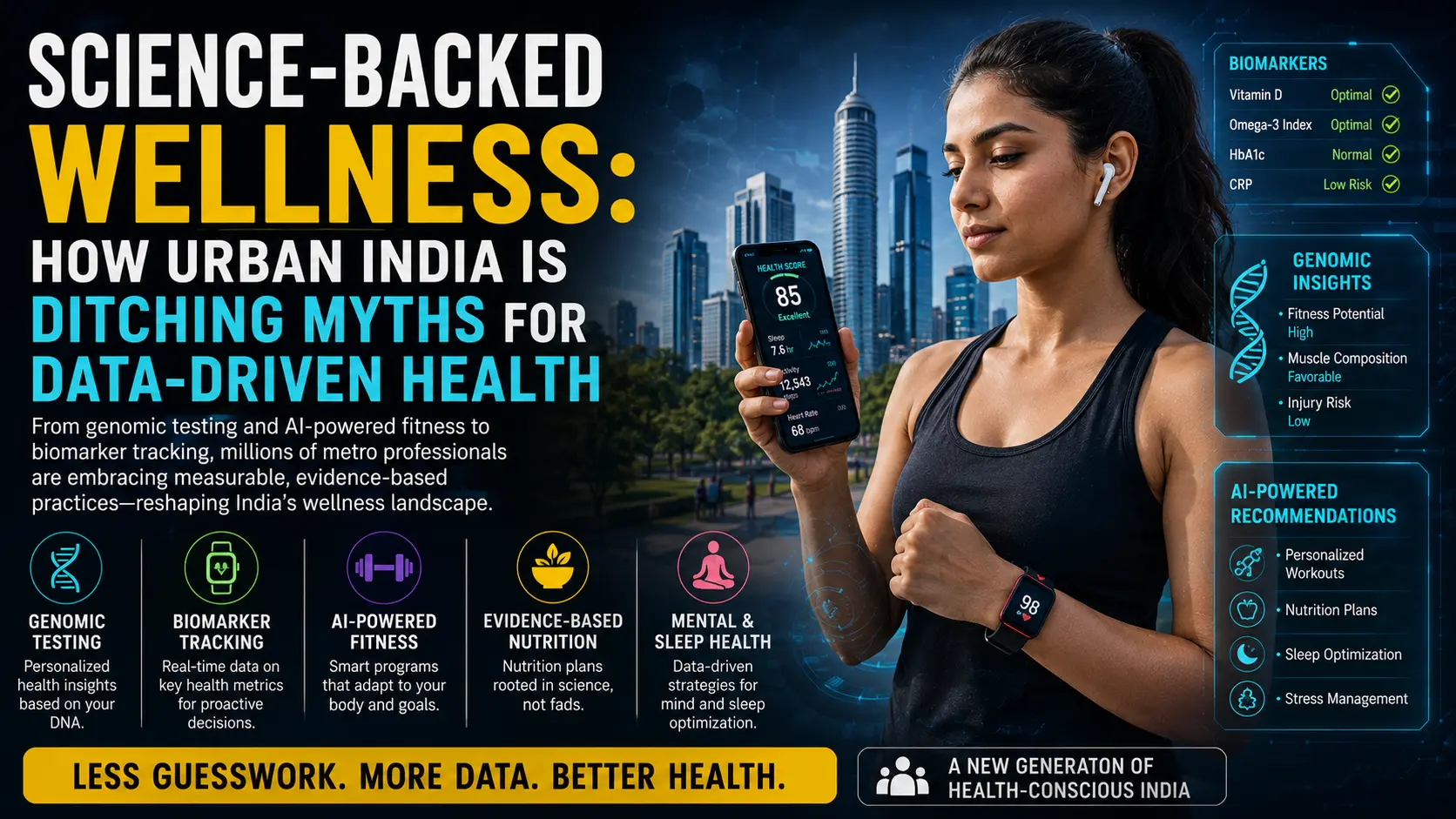
Science-backed wellness is reshaping how millions of urban Indians approach their health, ditching age-old folklore for evidence-based strategies backed by research and clinical validation. From personalized nutrition plans grounded in genomic testing to AI-powered fitness tracking and mental health interventions rooted in neuroscience, India's metro dwellers are no longer content with generic wellness advice. This shift reflects a deeper maturation in how the nation's affluent and upper-middle-class populations understand the link between daily habits, biological markers, and long-term health outcomes. The wellness industry in India, once dominated by ashrams and intuitive practitioners, is now attracting biotech entrepreneurs, certified nutritionists, and data scientists who treat health optimization like a precision engineering problem.
The Rise of Evidence-Based Health in India's Urban Centers
For decades, wellness in India was intertwined with spirituality and tradition. Yoga, Ayurveda, and home remedies formed the backbone of preventive care discussions. While these systems still hold cultural value, urban professionals increasingly want to know the mechanism: what exactly happens in your body when you practice pranayama? Which biomarkers improve, and by how much? This hunger for measurable outcomes reflects India's rapid digitalization and global exposure. Young executives earning upwards of ₹50 lakh annually are now investing in preventive health screenings, DNA-based diet consultations, and wearable devices that track heart rate variability and sleep architecture. The wellness conversation has moved from "feeling good" to "optimizing every metric."
This transition isn't merely cosmetic. Access to international research databases, telemedicine consultations with specialists worldwide, and affordable home-testing kits have democratized medical knowledge in Indian cities. A 28-year-old marketing manager in Bangalore can now order a comprehensive metabolic panel online, receive results via an app, and get a personalized wellness protocol from a nutrition scientist—all without stepping into a hospital. This accessibility has bred informed skepticism toward unverified claims and a preference for peer-reviewed evidence. Public health authorities and wellness startups have recognized this shift and are now structuring their offerings around published studies, clinical trials, and transparent data sharing.
Key Drivers Reshaping India's Wellness Landscape
The transformation toward science-backed wellness in urban India stems from converging factors. Rising incidence of lifestyle diseases—diabetes, hypertension, and cardiovascular conditions among young professionals—has made preventive health urgent rather than aspirational. Simultaneously, the wellness industry has matured with qualified practitioners earning credentials from recognized institutions. Corporate wellness programs now mandate health assessments based on biometric data, creating workplace demand for evidence-backed interventions. Media coverage of longevity research and high-profile wellness summits—such as the Longevity and Wellness Summit held at India Habitat Centre—has normalized conversations around aging science, cellular health, and biomarker optimization among upper-income groups.
Technology acts as the great enabler. Wearable devices, AI-driven health apps, and telemedicine platforms have made wellness monitoring continuous and personalized. What once required annual doctor visits now happens in real-time through smartphone sensors. Simultaneously, the business of wellness has attracted serious capital, with wellness startups and health-tech companies raising funding and bringing corporate rigor to service delivery. Industry leaders like Ritesh Mastipuram at Ridhira Group have articulated a vision where wellness transitions from a luxury escape—the expensive retreat weekend—to a purpose-driven daily practice grounded in individual biology and science-based protocols.
- Genomic Testing & Personalized Nutrition: DNA-based diet plans and micronutrient assessments are now mainstream among tier-1 Indian metros, revealing individual metabolic predispositions and optimizing nutrient intake accordingly.
- Biomarker Tracking: Real-time monitoring of glucose levels, lipid profiles, inflammation markers, and hormonal balance through home-testing kits and wearables enables data-driven lifestyle adjustments.
- AI-Powered Fitness & Recovery: Algorithmic training protocols that adapt based on performance data, sleep quality, and recovery metrics have replaced one-size-fits-all gym routines.
- Mental Health as Measurable Science: Neuroscience-backed cognitive behavioral therapy, stress biomarkers, and brain-training interventions are destigmatizing mental wellness and framing it as a measurable health domain.
- Corporate Wellness Programs: Organizations now embed preventive health screenings, health coaching, and evidence-based interventions into employee benefits, creating institutional demand for science-backed providers.
- Longevity Science Integration: Research into aging, cellular senescence, and lifespan extension has filtered into mainstream wellness conversations, with summits and educational events attracting professional audiences across India's metros.
How Urban Indians Are Adopting Science-Backed Wellness Today
Walk into any premium gym in Delhi, Mumbai, or Bangalore, and you'll see trainers consulting biometric data on tablets, discussing VO2 max and lactate thresholds with clients who compare their metrics on fitness apps. This isn't niche behavior anymore. A growing cohort of high-earning professionals is spending ₹2,000 to ₹10,000 monthly on personalized health coaching, genetic testing, and continuous biometric tracking. Nutritionists in these cities now regularly ask about sleep patterns, stress levels, and family health history before recommending dietary changes—an evidence-based intake process that treats nutrition as precision medicine rather than generic diet advice. Mental health apps offering therapy grounded in cognitive science have witnessed explosive adoption, particularly post-pandemic, with young urban Indians increasingly willing to invest in psychological wellness as a quantifiable health metric alongside physical fitness.
The shift extends to consumer purchasing behavior. Urban Indians are scrutinizing supplement labels for clinical evidence, preferring brands that cite peer-reviewed studies over those relying on testimonials. Health-conscious mothers in metros are replacing traditional home remedies with evidence-backed pediatric protocols, while older adults segment wellness as disease prevention informed by geriatric science rather than intuitive practices. This discernment has spawned new business opportunities: wellness startups offering science-backed meal plans, AI-driven sleep optimization, and personalized supplementation protocols are raising significant venture capital and attracting premium customers. The wellness narrative has fundamentally shifted from "try this ancient practice" to "here's the research, here's your individual data, here's what the evidence suggests for you."
Implications for India's Health System and Individual Wellness Choices
This transition creates both opportunities and challenges. On the positive side, evidence-based wellness empowers individuals to take ownership of their health through informed decision-making. Preventive health becomes proactive rather than reactive, reducing the disease burden on India's already strained public health infrastructure. As more urban professionals adopt preventive practices informed by biomarker data, the prevalence of preventable lifestyle diseases may gradually decline among affluent populations. This, in turn, could reduce healthcare costs and improve productivity. However, the science-backed wellness movement currently benefits primarily affluent urban dwellers, potentially widening health disparities between rich and poor Indians. A ₹50,000 genetic testing panel or a ₹15,000 monthly health coaching subscription remains inaccessible to India's middle and lower-middle classes, creating a tiered wellness landscape where data-driven optimization becomes a luxury good.
For individuals navigating this shift, the implication is clear: passive wellness—hoping good health happens through luck or cultural practices alone—no longer suffices. Urban professionals must now invest time and money in understanding their own biology, accessing quality health information, and committing to evidence-based behavior change. This requires financial literacy around health investments, digital fluency to navigate health-tech platforms, and critical thinking to distinguish genuine science from pseudo-scientific marketing. Educational institutions and public health bodies would benefit from raising awareness around health literacy and science communication, ensuring that the wellness transition doesn't become another mechanism for health inequality in India.
What's Next: The Consolidation of Science-Based Wellness in India
Over the next 3–5 years, expect further consolidation of science-backed wellness into mainstream urban Indian culture. Integration of AI and genomic data into corporate wellness programs will become standard rather than exceptional. Government health agencies may eventually develop evidence-based wellness guidelines tailored for Indian populations, accounting for genetics, dietary patterns, and endemic diseases specific to the Indian subcontinent. As awareness grows and costs decline through scale, science-backed wellness will gradually trickle into upper-middle-class and aspirational segments beyond the current premium demographic. Simultaneously, the wellness industry will face increased regulation and scrutiny around data privacy, clinical claims, and practitioner credentials—all necessary developments that will legitimize the space further.
For readers, the takeaway is straightforward: if you're an urban professional concerned about long-term health, exploring science-backed wellness isn't a luxury indulgence—it's increasingly a rational investment. Start with basics: a comprehensive health screening to establish your personal baselines, consultations with qualified practitioners who reference research, and a commitment to tracking measurable markers over time. The wellness landscape is shifting rapidly, and information asymmetry is a diminishing advantage. Those who engage thoughtfully with evidence-based health practices today will likely enjoy better outcomes than those relying on tradition or intuition alone.
Frequently Asked Questions
What exactly does science-backed wellness mean?
Science-backed wellness refers to health and fitness practices grounded in peer-reviewed research, clinical evidence, and measurable biomarkers rather than tradition or anecdote. It involves personalized approaches informed by genetic testing, continuous data tracking, and evidence-based interventions—such as AI-driven training protocols or nutrition plans based on individual metabolic profiles.
How much does science-backed wellness cost in India?
Costs vary widely. A comprehensive health screening ranges from ₹5,000 to ₹25,000. Genetic testing averages ₹15,000 to ₹50,000. Monthly personalized health coaching costs ₹5,000 to ₹15,000, while premium wearables range from ₹10,000 to ₹100,000+. Many urban professionals spend ₹2,000 to ₹10,000 monthly on integrated science-backed wellness services.
Can traditional Indian wellness practices like yoga and Ayurveda coexist with science-backed wellness?
Absolutely. Modern wellness practitioners are increasingly validating traditional practices through clinical research. Yoga's benefits on flexibility and mental health are well-documented in peer-reviewed journals. However, science-backed wellness adds precision: measuring specific improvements via biomarkers, personalizing practices based on individual biology, and integrating traditional wisdom with modern evidence to optimize outcomes.
Is science-backed wellness accessible to middle-class Indians?
Partially. While premium services remain expensive, telemedicine, affordable health-testing kits, and free or low-cost wellness apps have democratized access. However, personalized genomic testing and premium coaching remain concentrated among high-income urban segments, contributing to health inequalities in India.
What should I do first if I want to adopt science-backed wellness?
Begin with a comprehensive health screening to establish baseline metrics. Consult qualified practitioners—nutritionists, fitness coaches, or physicians—who reference clinical research. Invest in tracking tools (apps, wearables) to monitor progress. Prioritize sleep, stress management, and evidence-based nutrition before pursuing advanced interventions like genetic testing.