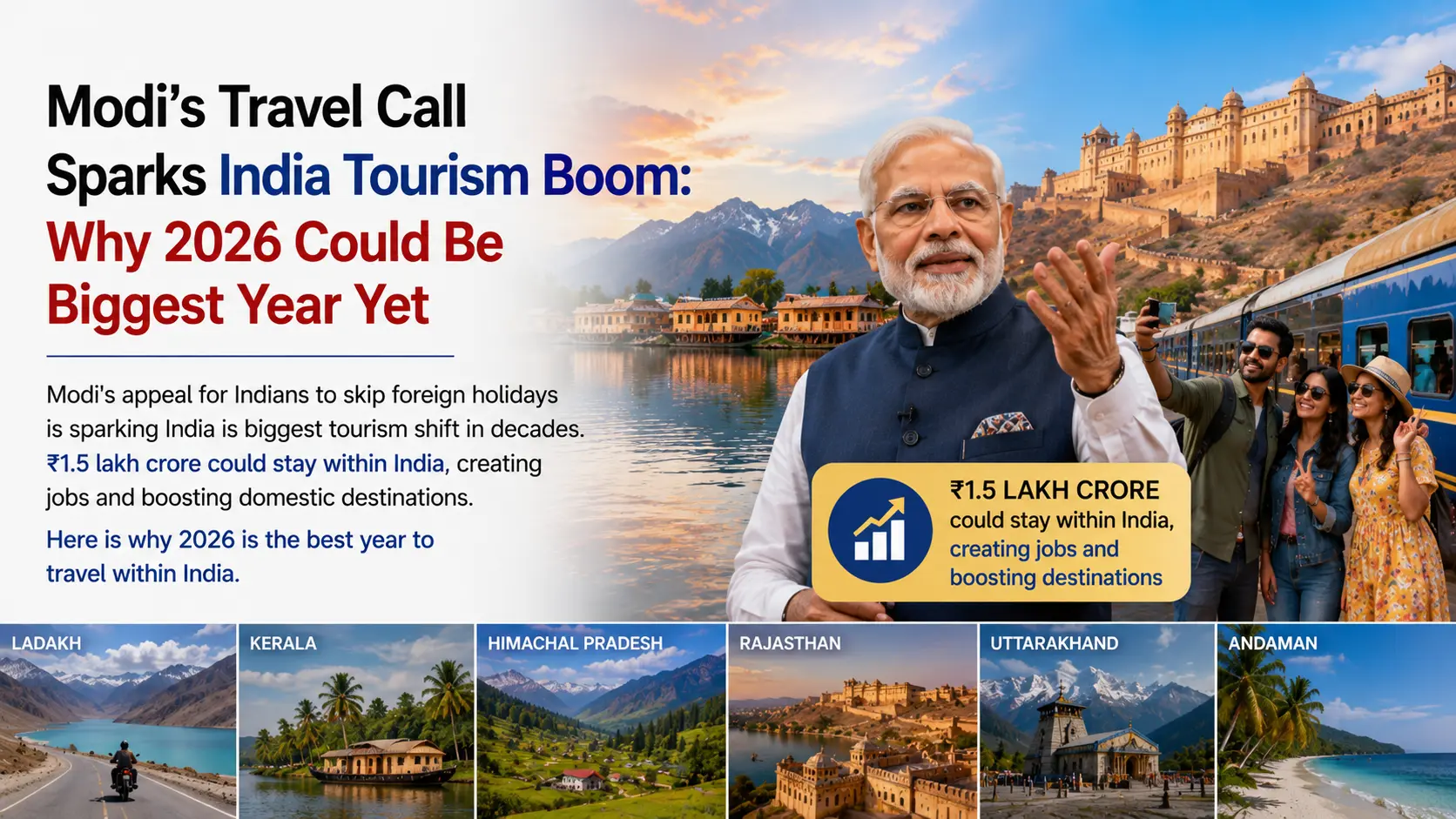
Prime Minister Narendra Modi asked Indians to skip foreign trips for a year. Good intention. But here's what the tourism industry is actually saying: that's only half the story. While the government urges citizens to stay home, hotel owners, travel agents, and tour operators are making a different plea — bring more foreign tourists to India instead. Because right now, international visitors coming into India are still below where they were before COVID hit. Meanwhile, Indians going abroad? That number keeps climbing. So the math doesn't add up.
- PM Modi called for Indians to defer foreign travel for one year as part of austerity measures during the West Asia conflict.
- Tourism industry leaders say the focus should shift to attracting foreign visitors rather than just restricting outbound travel.
- Inbound tourism remains below pre-pandemic levels while outbound Indian travellers continue to surge, creating a foreign exchange gap.
- India's tourism sector could contribute ₹4.2 lakh crore to national GDP according to official government projections for 2026.
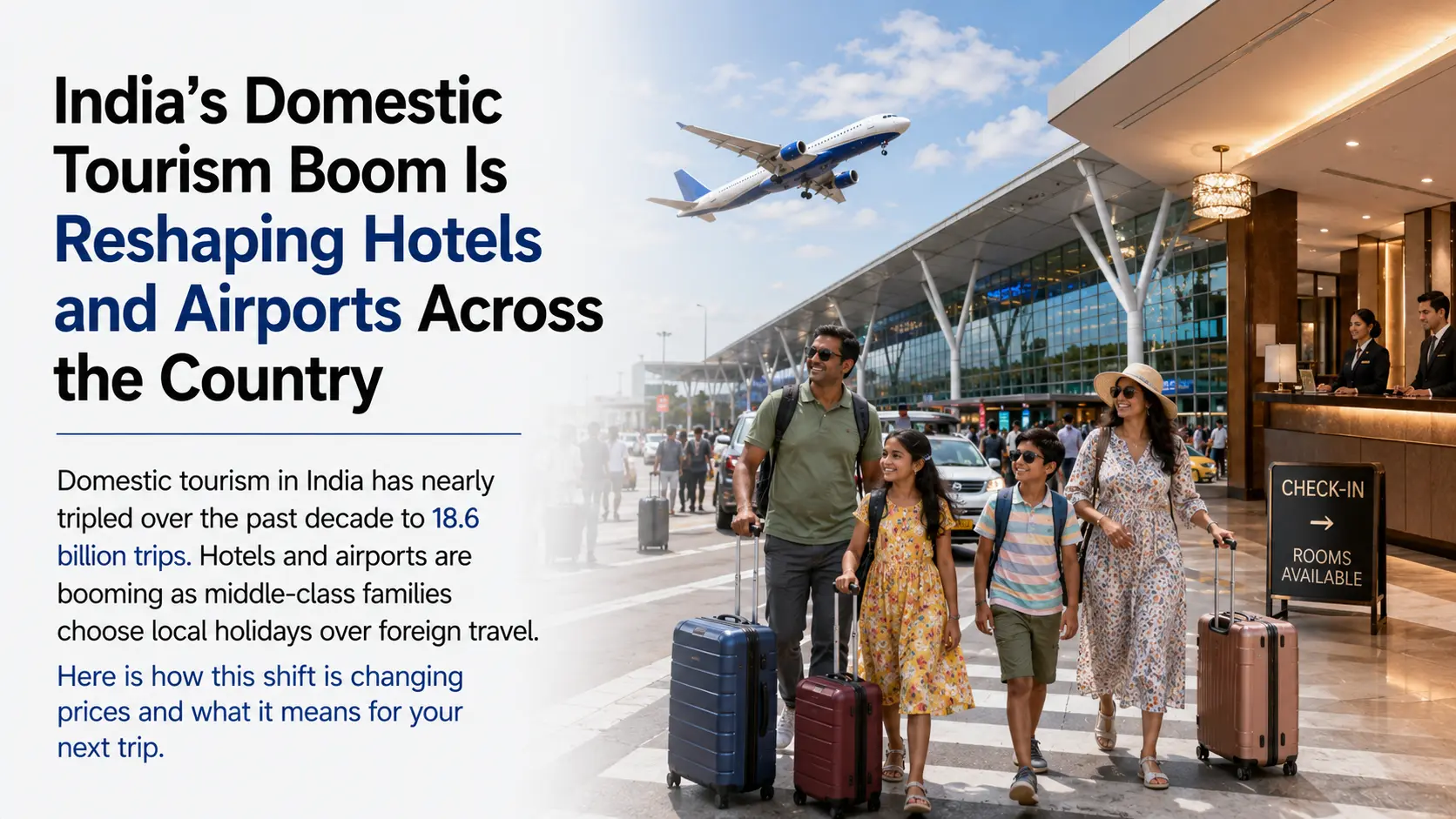
- Domestic tourism and heritage site visits are booming across hill stations, beaches, and pilgrimage centers across India.
- The industry urges a dual approach: encourage domestic travel and pilgrimages while actively marketing India as a world-class destination to foreign tourists.
Why This Fight Between the Government and Tourism People Matters
Look at it this way. India gets two kinds of money from travel. First, when foreign tourists visit India — they spend rupees at hotels, restaurants, shops, and monuments. That's called inbound tourism. Second, when Indians go abroad and spend money there — that money leaves India. That's outbound tourism.
Right now, inbound tourism hasn't fully bounced back from COVID. Foreign visitors are still coming in lower numbers than 2019. But here's the problem: Indians going abroad are going at higher rates than ever before. So if you stop one without fixing the other, you lose foreign exchange money without gaining anything back.
The Ministry of Tourism and major travel industry bodies have made this point clear to the government. They're not arguing against PM Modi's call for austerity. They're saying — please, also invest in bringing more international visitors to India at the same time.
What Exactly the Tourism Industry Is Asking For
The tourism sector has put forward a straightforward request. Two things need to happen together.
- Boost foreign tourist arrivals to India: Marketing campaigns in key countries like USA, UK, France, and Southeast Asia. Make it easier for international tourists to get visas. Improve airport infrastructure and digital payment systems for foreign visitors.
- Promote domestic tourism aggressively: Encourage Indians to explore India's heritage sites, pilgrimage centers, hill stations, and beaches. Every rupee spent inside India stays inside India.
- Don't just restrict outbound travel: Telling people to avoid foreign trips alone doesn't solve the foreign exchange problem. You need to replace that money by bringing foreign tourists in.
- Create long-term tourism corridors: Partner with airlines, hotels, and tour operators to build packages that make India attractive for international visitors — not just restrict Indians from leaving.
- Invest in tourism infrastructure: Better roads to heritage sites, trained tour guides, cleaner public toilets, improved security for women tourists — the things that make foreign visitors choose India.
- Fast-track visa approvals for tourists: Countries like Thailand and Vietnam process tourist visas in 24 hours. India should too. Speed matters for international travellers.
The industry isn't being selfish here. They're looking at basic economics. International tourism brings hard currency into India — dollars, euros, pounds. That's what the government needs during times of global economic pressure.
The Numbers Tell a Story You Should Know
Here's what the data actually shows. And these numbers matter because they explain why tourism people are pushing back so hard.
Before COVID in 2019, foreign tourists visiting India numbered about 1 crore 70 lakh people per year. By 2024, that number hasn't returned to those levels yet. We're still below pre-pandemic numbers for international visitors.
But Indian tourists going abroad? That's growing. More Indians are traveling to Thailand, USA, UK, Maldives, and Dubai than ever before. They're spending money outside India — roughly ₹2 lakh crore per year going out of the country.
So here's the math problem: If you restrict 20 lakh Indians from going abroad, they might save ₹30,000 each (rough number). That's ₹600 crore saved. But if those same 20 lakh people stay home and don't spend that money anywhere, where is the benefit? The money doesn't multiply — it just disappears from the economy.
Now imagine instead: those 20 lakh Indians stay home. And in their place, you bring 20 lakh additional foreign tourists. They stay for 4-5 days each, spend ₹40,000-50,000 each on hotels, food, guides, and shopping. Suddenly you've got ₹1,000 crore coming in. That's the tourism industry's argument in one paragraph.
What This Actually Means for You
If you're a student planning a backpacking trip to Southeast Asia next year — this doesn't directly stop you. PM Modi's request was voluntary, not a law. But it signals a government stance that might influence visa policies or flight taxes later.
If you're a hotel owner in Jaipur, Goa, or Kerala — this is good news. More domestic tourists mean more business for you. The government might push hotel rates down through competition, but occupancy should go up. For you, that means more bookings in 2025-2026.
If you work in the tourism sector — as a guide, travel agent, hotel staff, or driver — your job security actually improves if foreign tourists increase. One foreign tourist spends 5-10 times more than one Indian tourist. The maths is clear.
If you're planning to visit Taj Mahal, Varanasi, or Kerala backwaters as a domestic tourist — expect more crowds. More Indians vacationing inside India means popular sites get busier. Book early. Plan for longer queues at heritage sites.
What Actually Happens Next — The Real Timeline
The government won't ban foreign travel. That would be economically disastrous and legally complex. But here's what will likely happen.
First, expect a PR push toward domestic tourism. Holiday packages to hill stations, cheap flights to beach resorts, and promotions for pilgrimage tourism will increase in 2025. State governments will compete to attract domestic tourists with new attractions and infrastructure.
Second, the tourism industry will continue lobbying for better visa policies and infrastructure for foreign tourists. The Ministry of Tourism has already been moving on this — easier e-visas, faster approval times, and better digital payment systems for international visitors.
Third, watch for airline partnerships. Expect more international flight routes to Indian cities beyond Delhi and Mumbai. Bangalore, Hyderabad, and Kochi will see more international tourist flights.
What won't happen: A ban on Indians traveling abroad. What might happen: Gradual increase in visa fees or flight surcharges over the next 2-3 years.
Frequently Asked Questions About India's Tourism Push
What is inbound tourism and why is it important for India?
Inbound tourism means foreign tourists visiting India and spending money here. It's important because they spend in foreign currency — dollars, euros, pounds — which India can use for international trade. One foreign tourist spends ₹40,000-50,000 per trip. Multiple that by 1 crore tourists, and you get ₹4-5 lakh crore in foreign exchange. That money strengthens India's economy directly.
Why is outbound tourism from India growing if the government wants to restrict it?
More Indians can now afford international travel than ever before. The middle class is growing. Cheaper flights and better visa access mean more Indians visit Thailand, Maldives, and USA annually. The government can request people avoid it, but can't force them without damaging tourism freedoms. Income and choice drive this trend, not government policy.
How does the tourism industry's argument actually help ordinary Indians?
If foreign tourists increase, jobs grow in hotels, restaurants, transportation, and guide services. Domestic tourism pushes investment into highways, railways, and local infrastructure — benefiting all Indians. More tourism revenue means more tax money for schools and hospitals. Everyone gains when tourism grows, whether foreign or domestic.
What should I do if I'm planning to travel abroad in 2025?
PM Modi's appeal is voluntary. Plan your trip if you want. But consider this: international flight prices might increase slightly due to fuel surcharges or demand. Book early. If you're flexible, domestic tourism offers great value — Goa, Himachal, Kerala, and Rajasthan have world-class experiences at Indian prices. You save money staying in India.
When will the government officially announce new tourism policies for 2025-2026?
The Ministry of Tourism typically releases annual plans by March each year. Watch for announcements around National Tourism Day (January 25) and Budget season (February). Expect new visa policy changes, domestic tourism campaigns, and heritage site development projects to be announced during these periods. July to September usually brings new adventure and pilgrimage tourism pushes ahead of the holiday season.
The Real Issue Nobody Is Talking About
Here's what experts actually think when they read between the lines. The government's request to avoid foreign travel is partly about austerity during the West Asia conflict. That's real. But the tourism industry knows something else: India hasn't maximized its tourism potential yet.
India has everything foreign tourists want. The Taj Mahal. The Ganges. The Himalayas. Ayurveda. Ancient temples. Beaches. Wildlife. Spice routes. Buddhist pilgrimage sites. But India's international tourism numbers are still small compared to Thailand (40 million tourists per year), Indonesia (16 million), or even Greece (33 million). For a country of 140 crore people with world-class sites, India should be getting 3-4 crore foreign tourists annually. We're nowhere near that.
That gap is money left on the table. ₹2-3 lakh crore in potential foreign exchange that India is not earning because foreign tourists choose other countries instead. The tourism industry is essentially saying: stop thinking short-term about restricting travel, and start thinking long-term about capturing the global tourism market.
It's a smart argument. And quietly, multiple state governments — Karnataka, Kerala, Goa, Rajasthan, and Himachal Pradesh — are already pushing their own campaigns to attract international visitors. They've figured out that one foreign tourist is worth three domestic tourists in pure economic terms.
What to Watch For Next
Keep your eye on three things in the next 6-12 months.
First — visa policy announcements. If the Ministry of Tourism announces easier e-visas or faster approval times for tourists from USA, UK, Europe, or Southeast Asia, that's a signal the government is quietly backing the tourism industry's push. Watch the official tourism ministry website.
Second — infrastructure investments. Budget 2025 (February) will reveal how much money the government is allocating to tourism infrastructure — new airport terminals, heritage site improvements, highway expansions. That number shows whether the government is serious about attracting foreign tourists.
Third — PM Modi's next statement on tourism. If he shifts from restricting outbound travel to promoting inbound tourism, you'll know the tourism industry's argument won. Listen carefully to his next Independence Day speech or National Tourism Day address for this signal.
The next 6 months will show whether this is just a temporary austerity measure or a real policy rethink. Either way — book your domestic trip soon. The prices won't stay this reasonable if tourism picks up seriously in 2025.