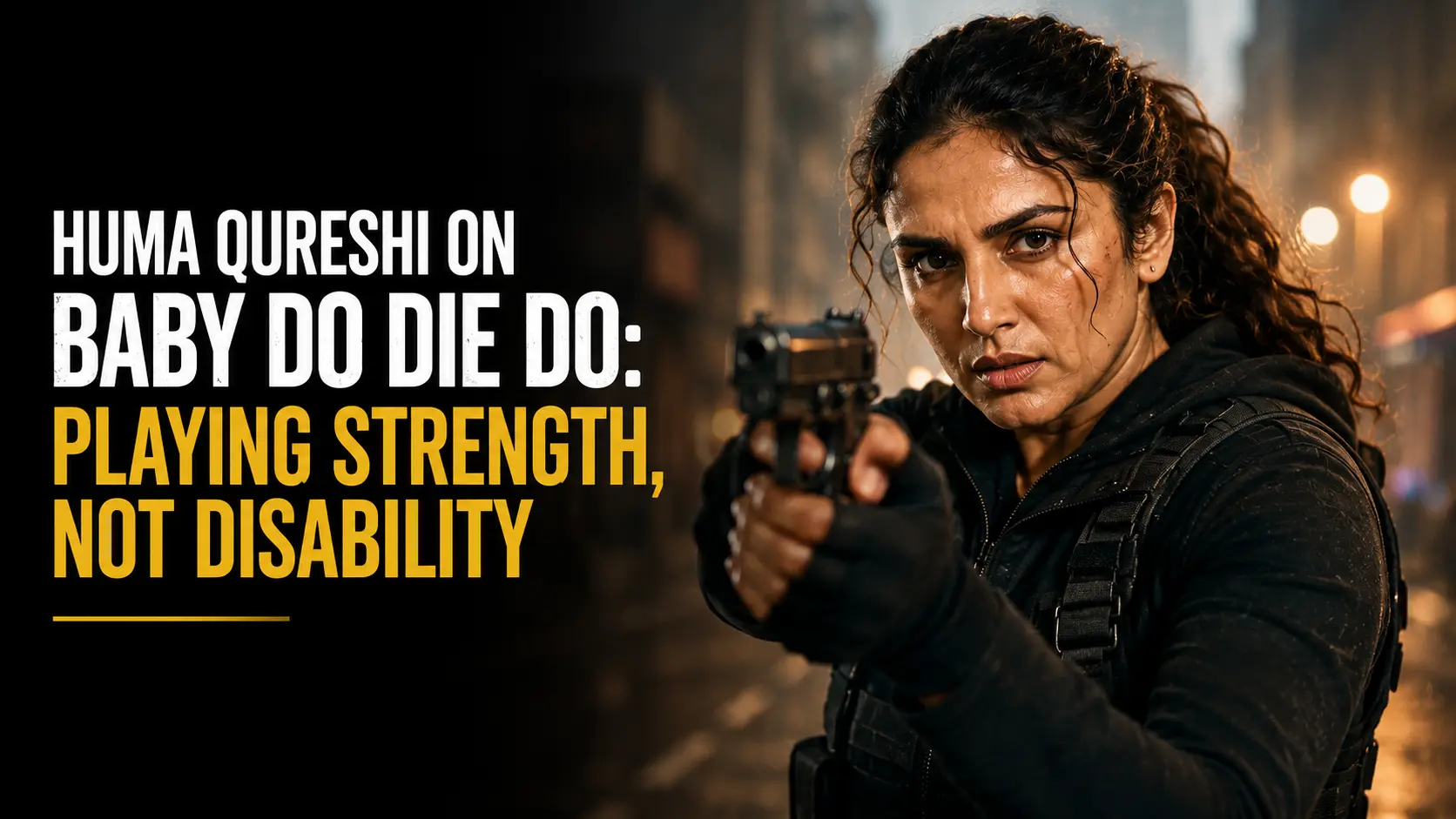
Title: Huma Qureshi on Baby Do Die Do: Playing Strength, Not Disability
Huma Qureshi has spent two decades watching cinema define women by what they lack—beauty fading, fertility ticking, sexuality on display. That stings. In her new film Baby Do Die Do, she plays something cinema almost never shows: a woman whose power comes not from charm or vulnerability, but from absolute control. Wild.
The character is deaf and mute. An assassin. The kind of role that could have been written as tragedy—a woman limited by disability. Not small. Instead, it becomes the opposite. Her silence is her weapon. Her difference is her edge. Unreal.
“This is the kind of story I have been waiting to tell,” Qureshi said in recent conversations about the film. Think. “Not about what she cannot do. About what she can.” And more.
- Film Release: Baby Do Die Do premiered on July 3, 2026, as a Hindi-language crime thriller
- Qureshi's Role: She plays Baby KarMarKar, a deaf and mute assassin—a character designed around strength, not limitation
- Director & Production: Directed by Nachiket Samant, produced by Saleem Siblings and Pune 04 Picture
- Qureshi's Mission: She wants the film to open doors for more complex female characters in Indian cinema—roles beyond hypersexualization
- Story Origin: Written by Jasmeet K Reen and Parveez Sheikh, the same duo behind the hit film Darlings
- Bigger Shift: Qureshi is backing unique, realistic scripts under her own production banner—signaling a directional change in how she chooses roles
Period.
Why This Role Matters More Than It Looks
Hindi cinema has a problem. Women are either ornamental or broken. Not anymore. There's almost no space between those two poles. Nobody talks about this.
A woman on screen gets a disability, and suddenly she becomes the story's tragedy—the character who needs rescuing, who inspires pity, who teaches everyone else a lesson about gratitude. That's real. Her humanity gets flattened into a metaphor.
Qureshi's character in Baby Do Die Do rejects that entirely. She isn't there to be inspiring. She's there to be lethal. Her deafness and muteness aren't the reason she's interesting. They're simply facts about her. The same way a man in a crime thriller is just a man. True.
“We wanted to show disability as a dimension of the character, not the whole character,” Qureshi explained. Think about it. One approach says: here's a woman with a disability. The other says: here's a woman—who happens to be deaf and mute—and watch what she does. Not small.
That shift is harder to pull off than it sounds. It requires writers who understand the difference. Directors who refuse to linger on the “inspiration” angle. Actors who won't play the victim card even once. And more.
But not for the reasons you'd expect.
The Film Behind the Role
Baby Do Die Do is a crime thriller—stylish, dark, designed around action and psychological tension rather than melodrama. Big. The film brought together Nachiket Samant (director), Saleem Siblings and Pune 04 Picture (producers), and writers Jasmeet K Reen and Parveez Sheikh, known for creating the screenplay for Darlings.
Here's what makes this particular collaboration worth watching:
- Stylistic Ambition: Critics note the film “expands the personality of an assassin thriller”—meaning it's not just another hitman story. The character-work goes deeper.
- Proven Writers: Reen and Sheikh already demonstrated their ability to write complex female characters in Darlings. This isn't their first time doing something unconventional.
- Genre Execution: A crime thriller with a deaf and mute protagonist is technically demanding. You can't rely on dialogue to carry scenes. Every physical choice, every gesture, every moment of stillness has to land.
- Qureshi's Track Record: She's played complex, morally gray characters before—which means she understands how to avoid making a character “likeable” and instead make her compelling.
- Production Design: The film required specific creative choices to make the character's communication methods feel natural, not staged or explanatory.
- Critical Reception: Early reviews acknowledge the film's structural ambitions, even while noting its stylistic reach sometimes exceeds its grip on the narrative.
The point: this isn't a film built around disability as a plot device. It's a film where the lead character's neurodiversity is simply woven into who she is. Wow.
Worth paying attention to.
What This Means for Qureshi's Career—and Cinema Broadly
Qureshi has been deliberate about role selection for years. She's turned down bigger-budget films for smaller, riskier projects because she wanted to work with specific directors or on stories that genuinely interested her. Huge.
What's new is her production involvement. She's now backing scripts herself—which means she isn't waiting for someone else to greenlight the kind of films she wants to appear in. She's building them. Big deal.
“I want to produce stories that feel real,” she said. “Female characters that aren't there to be looked at. They're there to drive the story.” That's the truth.
This matters because production credit means creative control. It means she gets to be part of the conversation about how the character is written, how she's shot, what the camera reveals and what it hides. Right?
For Indian cinema more broadly, this signals something: the conversation about female representation is shifting from “more roles” to “better roles.” Not just more women on screen—but women characters with agency, complexity, and a story that isn't fundamentally about their gender or their love interests. Big shift.
And that's just the beginning.
What This Means for You as a Viewer
Look—if you watch Hindi films, here's what actually changes when projects like this exist:
First, it expands what casting directors think is possible. When one film shows a deaf and mute female assassin played as a protagonist (not a victim or inspiration story), the next generation of scripts suddenly has permission to imagine things differently. Wow.
Second, it gives actors—especially women—more options. Instead of choosing between “glamorous supportive wife” and “tragic victim who learns resilience,” there's now a third lane: complex, driven, morally complicated women. And that's big.
Third, it tells audiences that cinema doesn't have to choose between entertainment and substance. A crime thriller can be exciting AND thoughtful about representation. These aren't competing goals. True.
For disabled audiences specifically: seeing a deaf and mute character as a capable protagonist—not as the heart-warming subplot, not as the reason for inspiration porn—is rare enough to matter. It's the difference between being represented and being used. No joke.
Nobody is talking about this enough.
What to Watch For Next
Qureshi's production banner is only getting started. If Baby Do Die Do finds an audience, expect her to greenlight more unconventional scripts. Yep. The pattern is already clear: she isn't interested in repeating herself.
The bigger question is whether other established actors start following her lead. If more performers begin producing their own content, the entire ecosystem shifts. Writers get bolder. Directors get more freedom. Studios have to compete for talent by offering better material, not just bigger paycheques. And now?
That doesn't happen overnight. But it starts with one actor making a deliberate choice to back a story that interests her—not because it's a vanity project, but because cinema needs it. Key point.
Watch what Qureshi greenlights next. That will tell you everything about whether this was a one-off or the beginning of something larger. The result?
Really.
Frequently Asked Questions About Huma Qureshi and Baby Do Die Do
What is the character Baby KarMarKar in Baby Do Die Do?
Honestly—Baby KarMarKar is a deaf and mute assassin—the film's protagonist. She's written as a capable, driven character whose disability is a dimension of her identity, not the source of her story. Her muteness and deafness are treated as neutral facts, not as limitations.
Who directed Baby Do Die Do and who wrote it?
Simply put, Nachiket Samant directed the film. The screenplay and dialogues were created by Gaurva Sharma and Samant, working from an original story by Jasmeet K Reen and Parveez Sheikh—the same team behind Darlings. The film was produced by Saleem Siblings and Pune 04 Picture, and its release was on July 3, 2026. This collaboration underscores a focus on strong narrative.
How does Huma Qureshi approach playing a deaf and mute character?
Here's the short version: Qureshi emphasized that the character's strength comes through her actions and presence, not through dialogue. She wanted to show disability as one aspect of a complex person, not as the defining tragedy.
What is Huma Qureshi's production banner working on?
The thing is, under her banner, Qureshi is backing offbeat, realistic scripts that focus on complex female characters—roles that break away from typical hypersexualization or victimhood narratives in Hindi cinema. She's producing stories where women drive the narrative, not just support it, aiming for a significant shift in representation. This vision is setting a new standard.
When did Baby Do Die Do release and where can you watch it?
Good question. The film premiered on July 3, 2026. Based on the production partnership, it released through theatrical distribution. However, specific streaming platform availability and OTT details would depend on the production's release strategy agreements, which often follow initial cinema runs.