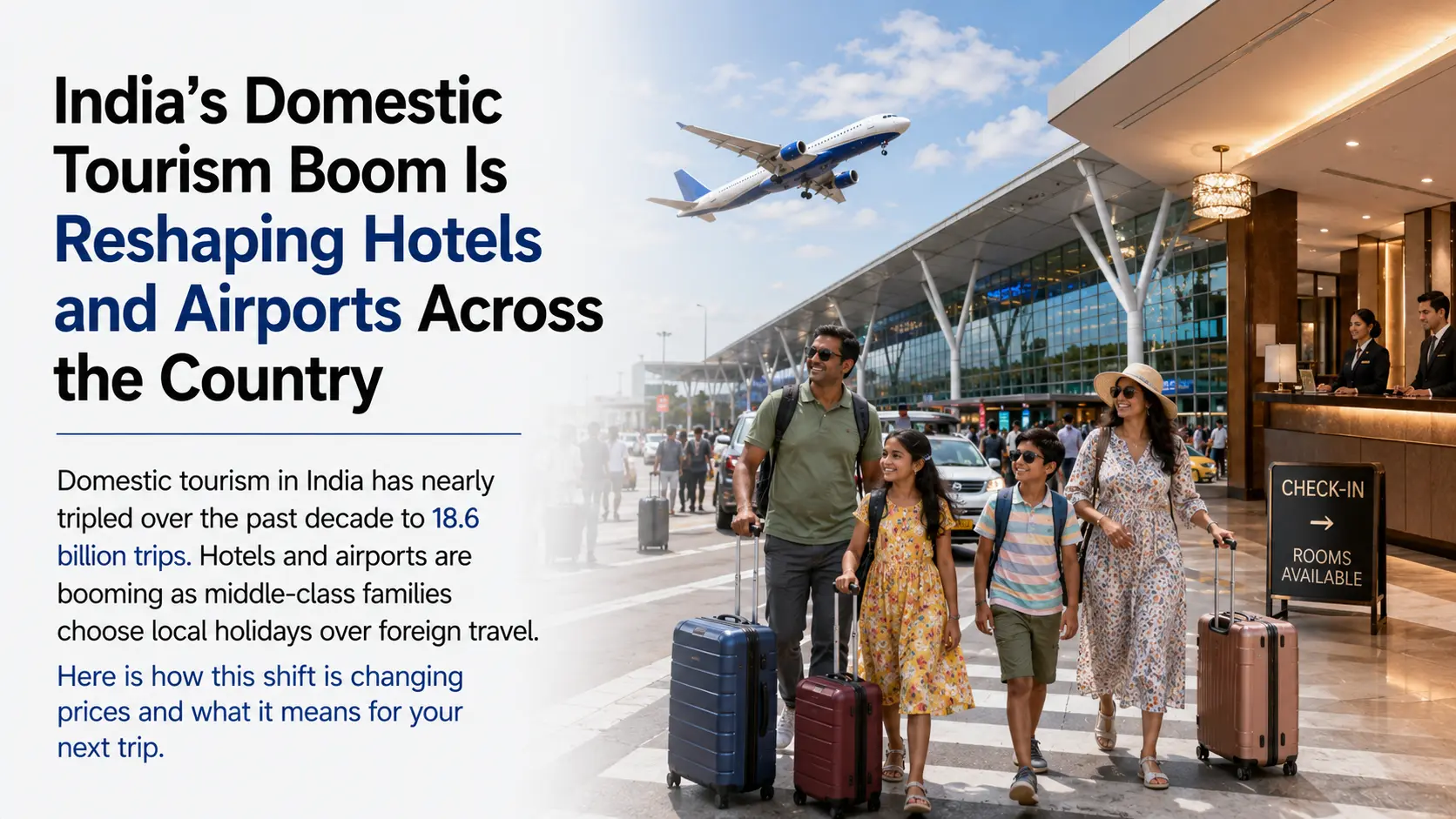
India's Domestic Tourism Boom Is Reshaping Hotels and Airports Across the Country
Something totally unexpected is happening at Indian hotels and airports right now—the kind of fundamental change most people aren't talking about. Big shift. Travellers are choosing to stay home, and it's changing everything about how the hospitality business works. Think about it. Over the past decade, domestic tourism hasn't just grown; it has nearly tripled. We're talking about 18.6 billion local trips between 2014 and 2024, a massive jump from just 6.8 billion in the ten years before that. No joke. That isn't just a number; it's millions of ordinary Indian families booking hill stations instead of foreign holidays, choosing beaches in Goa over Greece, and visiting temples in Varanasi instead of Europe. The result? The hotel industry is scrambling to figure out how to capture this wave.
- The last decade saw a staggering 18.6 billion domestic trips—almost 3x the previous one—and it's completely upending hotel investment strategies.
- Look, airport hotels and budget chains are booming because flying is finally affordable for middle-class Indian families taking trips within the country.
- Even luxury hotel chains like IHCL and The Leela are now betting big on premium domestic travellers, not just foreign tourists. And that's big.
- The fastest growth isn't in 5-star hotels; it's in affordable hotels and tier-2 city properties targeting families with a ₹5,000 to ₹15,000 per night budget.
- None of this would be possible without major infrastructure growth—better roads, airports, and rail networks—that made it easy and cheap for Indians to explore their own country.
- Here's the bottom line: the next 5 years will decide everything. Hotels investing in domestic comfort now are going to win big, while those betting only on foreign luxury might really struggle.
And here's why that matters.
How India's Travel Game Changed
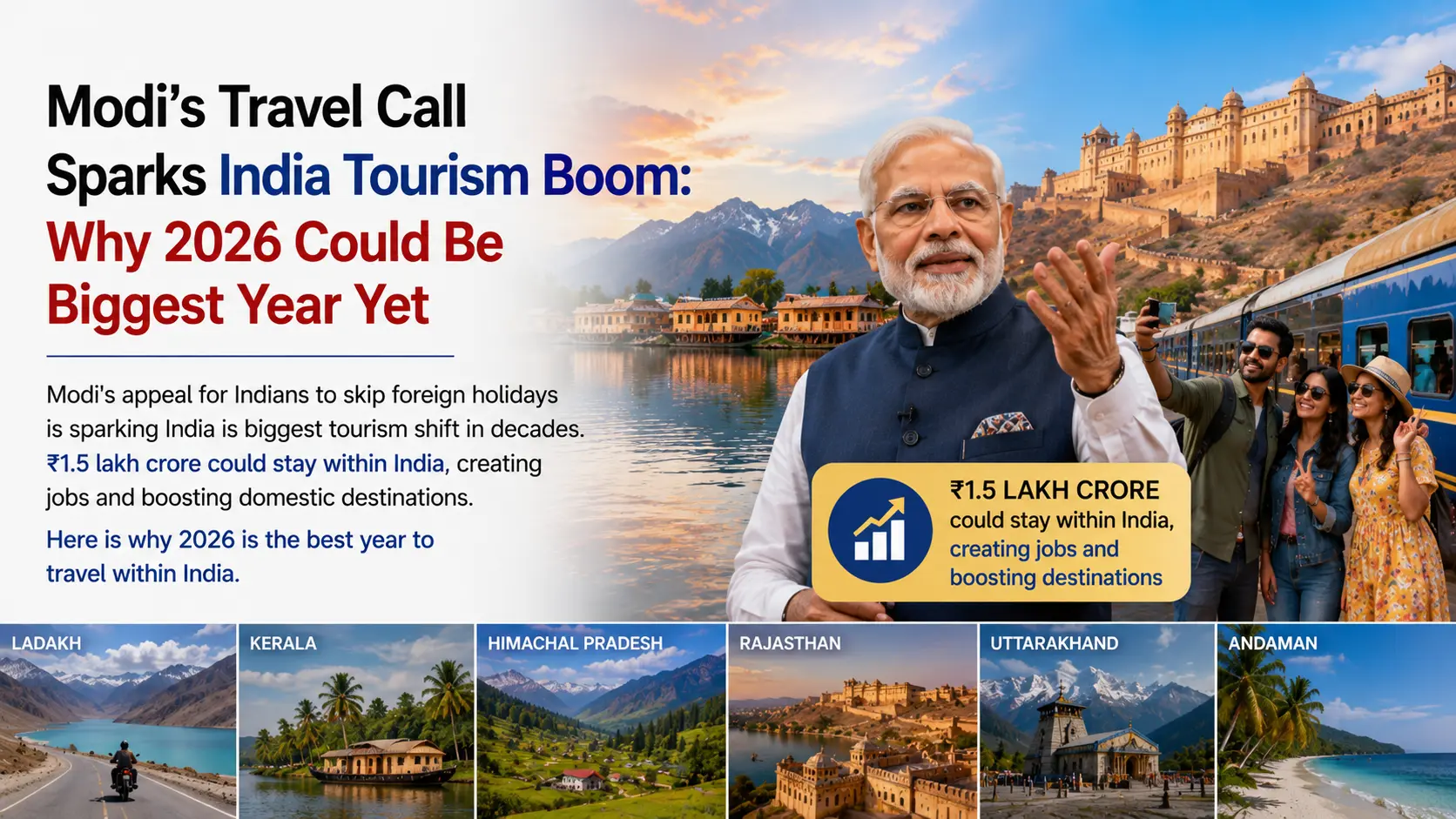
If you travelled India ten years ago, the story was completely different—a world away from today, really. Not anymore. Back then, rich Indians went abroad. Period. Budget travellers barely existed. But something shifted, and it happened quietly, without any single announcement. First, flight prices dropped. Budget airlines like IndiGo and SpiceJet made flying to Bangalore or Goa as cheap as a good train ticket. Then better roads happened. Wild. The highway network expanded, making a drive from Delhi to Manali a 10-hour trip instead of 20. Then came the push from government officials saying, “Spend your money in India.” Whether that was the cause or just echoing what was already happening, the data tells the real story: Indian families started choosing domestic trips.
Wow.
For a software engineer in Pune, this means she can take her parents to Kerala during Diwali without dropping ₹2 lakh on international flights. Worth it. For a school teacher in Delhi, this means she can actually afford a weekend in Shimla with her family. Let that sit. And for a retired couple in Mumbai, this means they can finally visit every pilgrimage site they always wanted to see, one city at a time. That's the truth. That's the real story hiding inside those big numbers.
But not for the reasons you'd expect.
What the Hotels Are Doing About It
The hotel industry didn't just notice this shift; they're redesigning their entire business model around it—and it's happening faster than anyone predicted. Key point. Here's what's actually happening on the ground right now. And?
- Airport hotels are absolutely booming. Why? Because domestic flights got cheap and frequent, so Indians are now taking way more weekend trips. A traveller landing in Goa at 7 PM for a quick getaway needs a hotel near the airport, and now there are dozens.
- Budget chains are everywhere. OYO, Fabhotels, and similar chains have exploded in tier-2 cities like Indore, Nagpur, and Coimbatore. These are towns where luxury hotels would never survive, but they're perfect for the middle-class Indian families who actually visit. A ₹3,000 per night clean room beats a ₹800 dirty one every time.
- Luxury hotels are chasing domestic wealth. Here's the thing—IHCL (the company behind Taj hotels) isn't just waiting around for foreign tourists anymore. They're building premium domestic experiences. The Leela, another luxury chain, is investing hard in domestic travellers because they finally realized a wealthy Mumbai family spending ₹20,000 a night is just as good as a foreign tourist. Actually, they're better—they come back more often.
- Heritage sites are getting massive hotel investments. Around places like Jaipur, Varanasi, and Khajuraho—destinations Indian families genuinely visit—hotels are multiplying. And we're not just talking about quality improvements. We're talking entirely new properties. The demand is real.
- Infrastructure is the quiet hero. Let's be clear: none of this happens without roads, flights, and trains. India has seen ₹11 years of non-stop infrastructure growth. Better highways mean more car trips. More airports open up new destinations. Better rail networks mean families can travel cheap. All of it enabled this tourism boom.
- Technology made booking ridiculously easy. Fifteen years ago, booking a hotel in Udaipur meant calling someone or physically going to a travel agent. How often do you see something like this? Now it's one click on your phone. That ease means spontaneous trips happen. And spontaneous trips mean more hotel bookings.
So the net result is this: the Indian hospitality sector is in the middle of the biggest expansion it has ever seen. Big deal. And it's only getting started. Period.
The kind of thing most people miss.
What Experts Are Saying (And What They Are Not Saying)
Listen, the government is happy. And the hotels are happy. Right? But what are people actually thinking? But who really benefits here? Here are three very different perspectives:
The government's view: When officials talk about pushing domestic tourism, what they really mean is jobs and rupees staying in India. Unreal. Hotels hiring staff, restaurants getting business, and local guides, taxi drivers, and shop owners all earning money. And this is economic stimulus that doesn't require foreign exchange. That's why they pushed it so hard.
The hotel industry's view: They suddenly had a massive realization. Domestic tourism isn't a backup plan for when international tourists vanish. It's actually more stable. Think. International travel gets hammered by global recessions, visa policies, and geopolitical drama. But Indian families? They save money for holidays year after year. They're consistent. That's predictable business you can build on.
The ordinary traveller's view: “I can finally afford to travel. And I want to see my own country first.” That's the real truth nobody puts in official reports. Indians discovered that while the Maldives is nice, the Kerala backwaters are just as beautiful. Switzerland is gorgeous, but Himachal is cheaper and equally stunning. That shift in mindset is permanent. Once you've discovered it, you don't forget it.
Just look at the comparison to other countries—Thailand gets 40 million international tourists a year, while India gets maybe 10 million. Big. But India gets 18.6 billion domestic trips. That's over 1,000 times more travel happening *inside* India than from outside coming in. The real tourism market isn't foreigners. It's us.
Big shift.
How This Hits Your Wallet
Let's be direct. So what does this actually mean when you're planning your next holiday? What's the impact?
For families with a ₹50,000 to ₹100,000 annual holiday budget: Hotel prices in tier-2 cities are still going up, but it's slow. That's the truth. You can still get good value in places like Indore, Bhopal, or Guwahati. But in hotspots like Goa, Jaipur, and Agra? Prices are climbing fast. That stings. Hotels know demand is high, and they're cashing in.
For families with bigger budgets: Luxury is, in some ways, becoming more affordable. Why? More hotels mean more competition. A 5-star experience in Delhi that cost ₹25,000 a night five years ago might be ₹18,000 now—not because prices dropped, but because you have way more choices. More hotels equals more discounts and deals. Yep.
For solo travellers and young professionals: Budget hotels are getting so much better. A few years ago, ₹2,000 to ₹3,500 per night might get you a questionable room. Not anymore. Now, that same money gets you a clean room, decent WiFi, and reliable service in most major cities. That's real improvement in value.
So what should you do right now? Book during off-season months—June, July, November. And you must avoid school holidays and festival seasons when prices can spike 30-50%. Choose tier-2 cities over the famous ones: Udaipur instead of Jaipur, Darjeeling instead of Shimla. You'll get the same kind of experience for half the price because the crowds haven't fully discovered these places yet.
And that's just the beginning.
What Happens in the Next Five Years
But here's the real question—what happens next? Can the system keep up?
Right now, growth is happening at a blistering pace. True. But infrastructure has its limits. And that's big. There are only so many hotels you can build, only so many flights an airport can handle, and only so many tour guides available in a city. And where does that leave the rest of us? The next phase of this story will be about whether supply catches up to demand—or if prices just keep rising out of control.
Three scenarios to watch:
Scenario 1 — The optimistic version: Infrastructure investment keeps pouring in. More airports, more hotels, more trains. Prices stay reasonable. Indian families keep taking 2-3 domestic trips per year. And the hospitality sector becomes a major employer across 500+ cities, not just 20. Hotels invest in tier-2 and tier-3 cities because the demand is there.
Scenario 2 — The likely version: Growth continues, but it's uneven. Big cities and famous destinations get very expensive. Smaller cities get affordable hotels and see a real tourism boom. The price gap widens between Kashmir/Kerala and everywhere else. And rich Indians start using international trips as a status symbol again. Middle-class Indians will dominate domestic travel.
Scenario 3 — The warning: Infrastructure just can't keep pace. Flights get overbooked. Roads get congested. Hotels hike prices just because they can. Young people and budget travellers get completely priced out. Domestic tourism plateaus. This isn't theoretical; it's already happening in Goa, Jaipur, and parts of Kerala.
Watch three key dates. First, government tourism spending announcements (usually in February). Second, international flight tariff changes (which affects how expensive it is to go abroad). And third, hotel occupancy reports from IHCL and other chains—if occupancy dips below 70%, prices will drop. If it stays above 80%, expect more increases.
The numbers don't lie.
Frequently Asked Questions About India's Domestic Tourism Boom
What exactly is domestic tourism and why does India care so much about it?
Simply put, it's Indians travelling inside India. India cares because it keeps money inside the country, creates local jobs, and doesn't rely on foreign exchange. When a Delhi family spends ₹1 lakh on a Goa trip, that money stays here.
How much have hotel prices actually increased due to this boom?
Good question. Prices vary wildly. In tier-1 cities like Goa and Jaipur, you're looking at 20-35% increases over 5 years. But in tier-2 cities, it's a modest 5-10%. The sweet spot for value is in smaller cities and off-season months, where quality hotels run ₹2,500-₹4,000 per night. This demand-pull inflation is most noticeable during peak seasons like Diwali, when last-minute bookings can see prices double.
Which Indian destinations should I visit before they get too expensive and crowded?
Here's the short version: check out Guwahati in Assam, Indore in MP, and Coimbatore in Tamil Nadu. These spots are still affordable and less crowded. Also, Himachal destinations outside Shimla—like Palampur and Dharamshala—are great alternatives to Manali.
Is it still worth booking a domestic hotel for a weekend, or are prices too high now?
The thing is, yes, it's absolutely worth it. A weekend trip for a family of four to a nearby spot can still be done for ₹12,000-₹20,000, which is often cheaper than one fancy dinner in Mumbai. It's not just about cost anymore; it's about value. Five years ago, a cheap hotel often meant a bad experience, but now competition has forced quality up even at lower price points.
What is the government actually doing to push domestic tourism forward?
Look—they're investing heavily in highways, airports in tier-2 cities, and better railway routes. They're also promoting pilgrimage tourism through specific schemes and encouraging state tourism boards to market local destinations. The whole idea is to make travel easier and cheaper for everyone.
The Bottom Line
India is in the middle of a tourism revolution, and it isn't about foreign tourists anymore. Not small. It's about 1.4 billion Indians discovering their own backyard. Hotels, airports, and restaurants are all racing to keep up. Facts. Prices are rising in famous spots, while value is exploding in lesser-known destinations. So who benefits most from this boom? The traveller who acts before prices fully adjust. That gives you maybe 18-24 months.
The real question isn't whether this trend will continue. The numbers make that obvious. The question is where you will travel while you can still afford it.