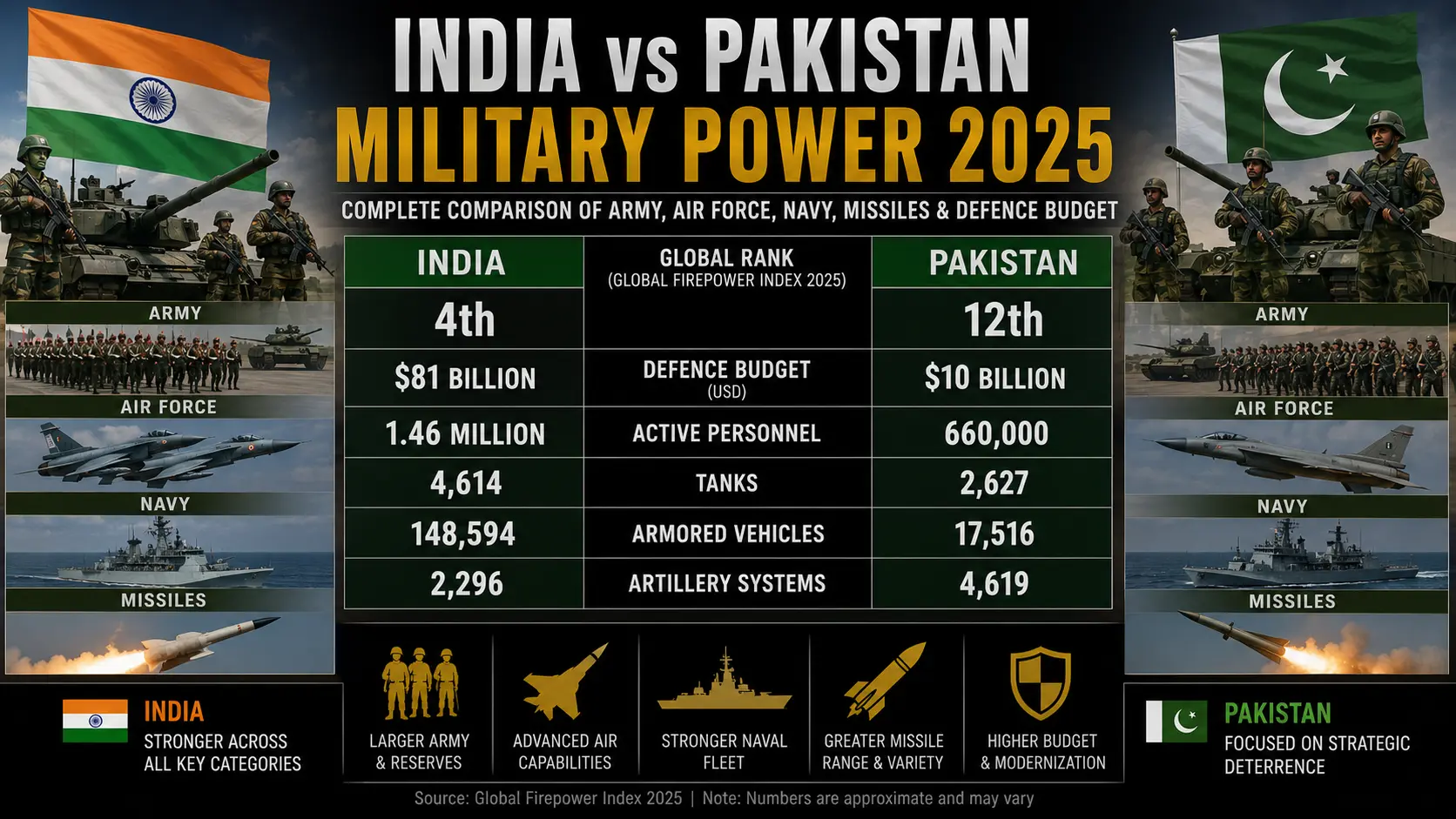
India vs Pakistan military power in 2025 reveals a gap that is far wider than most people realise — and yet, it is not quite the walkover that the numbers alone might suggest. According to the Global Firepower Index 2025, India holds the 4th rank worldwide with 1.46 million active troops and a defence budget of $81 billion, while Pakistan sits at 12th with 660,000 active personnel and roughly $10 billion allocated to defence. On paper, that is a ten-to-one spending advantage for India. But geopolitics, nuclear deterrence, asymmetric warfare capabilities, and geography have a way of making raw numbers complicated. Here is what the real picture looks like.
Why India-Pakistan Military Comparison in 2025 Carries More Weight Than Ever
The India-Pakistan military rivalry has never existed in a vacuum. It is shaped by decades of conflict, four wars, ongoing border tensions across the Line of Control, and the ever-present shadow of nuclear weapons on both sides. In 2025, this comparison carries fresh urgency because both nations have been actively modernising their armed forces, investing in indigenous weapons systems, and recalibrating their strategic doctrines to account for new-age warfare — drones, cyber operations, space-based surveillance, and precision-guided munitions.
For Indian citizens and defence enthusiasts, understanding this balance of power is not just academic. It directly informs how India positions itself in South Asia, how it navigates its relationship with China (which directly supports Pakistan's military build-up), and why defence budget allocations look the way they do every February during the Union Budget. The stakes, in short, are civilisational — and they deserve serious analysis.
Key Facts and Developments in India vs Pakistan Military Strength 2025
The Global Firepower Index 2025 gives us the most comprehensive publicly available data for this comparison. India's overall military score reflects not just manpower but also logistics capacity, naval reach, aerial dominance, and technological edge. Pakistan, despite its lower ranking, should not be dismissed as a minor military actor — it fields a battle-hardened army with significant experience in counter-insurgency operations and maintains a credible nuclear deterrent.
- Global Rankings: India ranks 4th globally; Pakistan ranks 12th on the Global Firepower Index 2025.
- Active Troops: India commands 1.46 million active military personnel compared to Pakistan's 660,000 — more than double the boots on the ground.
- Defence Budget: India's defence allocation stands at approximately $81 billion in 2025; Pakistan's budget is around $10 billion, roughly one-eighth of India's.
- Air Power: India operates over 2,200 aircraft including advanced fighters like the Rafale, Su-30MKI, and the domestically developed Tejas; Pakistan's air fleet is significantly smaller, relying heavily on the F-16 and JF-17 Thunder developed jointly with China.
- Naval Strength: India's navy includes two aircraft carriers — INS Vikrant and INS Vikramaditya — numerous submarines, and a growing fleet of destroyers and frigates; Pakistan has no aircraft carrier and a comparatively modest naval footprint largely oriented toward the Arabian Sea.
- Missile Systems: India possesses the BrahMos supersonic cruise missile, Agni series ballistic missiles with intercontinental-range variants, and the S-400 air defence system; Pakistan fields the Shaheen and Ghauri ballistic missile series along with Chinese-supplied cruise missiles.
- Nuclear Warheads: Both nations are estimated to possess roughly 160–170 nuclear warheads each, making nuclear parity one area where the conventional gap closes dramatically.
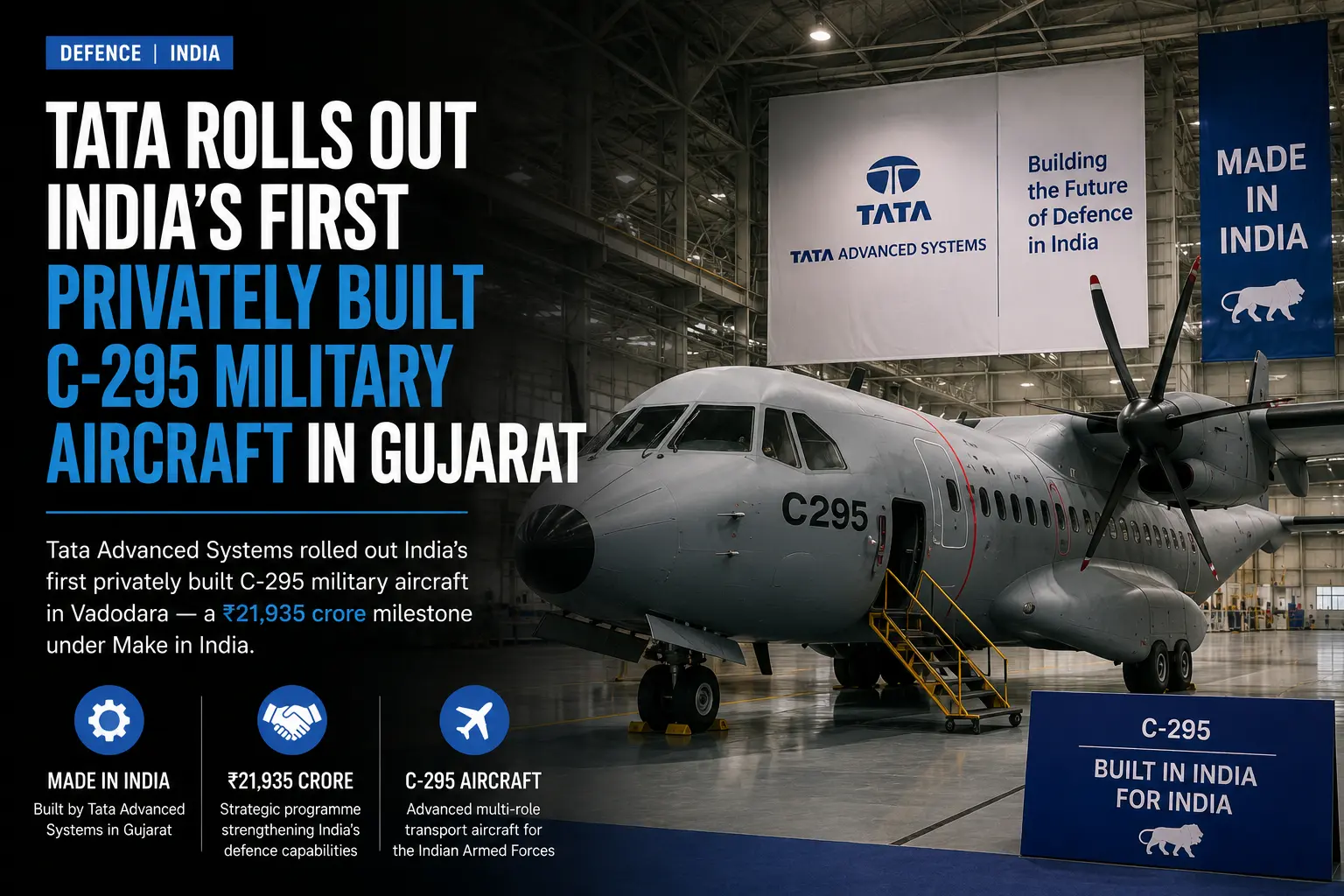
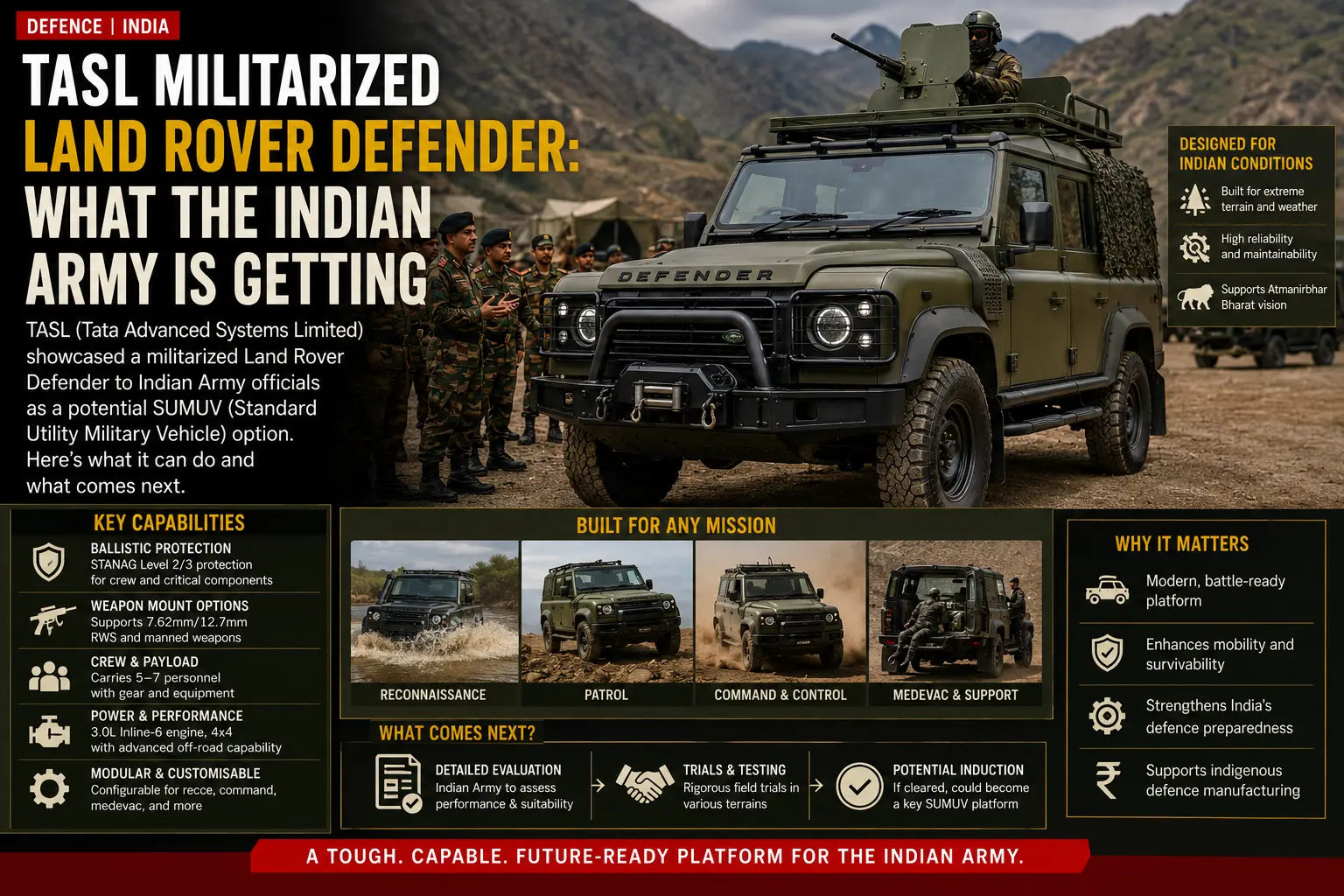
What makes 2025 particularly noteworthy is India's accelerated push toward indigenisation under the Atmanirbhar Bharat framework. The induction of the Tejas Mk-1A, advances in the Arjun tank programme, and the commissioning of INS Vikrant as a fully operational carrier signal a structural shift — India is no longer dependent on foreign platforms for its frontline capabilities the way it was even a decade ago. Pakistan, by contrast, leans heavily on Chinese hardware, including the HQ-9 air defence system and Type 054A/P frigates, which introduces its own strategic dependencies.
Impact and Analysis: What This Military Gap Really Means for South Asian Security
The raw numbers confirm Indian military superiority across almost every conventional domain. But analysts are quick to point out that a ten-to-one budget advantage has not historically translated into ten-to-one battlefield superiority, especially in a nuclear environment where escalation risk is ever-present. Pakistan's strategic calculus deliberately accounts for this — its military doctrine relies on the threat of early nuclear use to deter conventional Indian offensives, a posture often described as the "full-spectrum deterrence" strategy. This is precisely why India maintains its own No First Use nuclear policy while simultaneously developing Cold Start-style conventional response options.
From a geopolitical perspective, the China factor cannot be overstated. Beijing's ongoing military and financial support to Islamabad — through the China-Pakistan Economic Corridor, arms transfers, and diplomatic cover — effectively means India is managing a two-front strategic challenge. India's $81 billion defence budget, while impressive by South Asian standards, must be spread across a 3,488-kilometre border with China and a 3,323-kilometre boundary with Pakistan simultaneously. That context changes the conversation significantly. Pakistan's $10 billion, focused almost exclusively on one adversary, generates a different kind of strategic efficiency even if the absolute numbers look lopsided.
What's Next: India's Military Trajectory and What Readers Should Watch
Looking ahead, the trajectory strongly favours India's continued expansion of the military gap, but not without challenges. India's defence modernisation plan includes acquiring additional Rafale Marine jets for INS Vikrant, expanding its nuclear-powered submarine fleet with INS Arighaat already commissioned and more SSBNs under construction, and rolling out advanced indigenous air defence systems under Project Kusha. The Indian Army is also in the process of integrated theatre command reforms — reorganising its service branches into unified commands that can operate seamlessly across domains, something Pakistan has not attempted at the same scale.
For readers tracking this space, the next 12–18 months will be telling. Watch for India's defence budget in February 2026, progress on the Tejas Mk-2 programme, and any shifts in Pakistan's Chinese-supplied platform inductions, particularly whether Beijing follows through on promises of fifth-generation J-35 aircraft for the Pakistan Air Force. The military balance in South Asia is not static — it is an ongoing, high-stakes negotiation between capability, deterrence, and political will.
Frequently Asked Questions
What is India's military rank compared to Pakistan in the Global Firepower Index 2025?
According to the Global Firepower Index 2025, India ranks 4th globally in military strength while Pakistan ranks 12th. India has 1.46 million active troops and an $81 billion defence budget, compared to Pakistan's 660,000 personnel and approximately $10 billion in defence spending.
Does Pakistan have nuclear weapons comparable to India in 2025?
Yes. Despite the significant conventional military gap, both India and Pakistan are estimated to possess roughly 160–170 nuclear warheads each as of 2025. This nuclear parity is the most critical equaliser in the India-Pakistan military equation, preventing full-scale conventional conflict through mutual deterrence.
How does China's support affect Pakistan's military capability against India?
China provides Pakistan with advanced weapons platforms, including the JF-17 Thunder jets, HQ-9 air defence systems, Type 054A/P frigates, and financial support through CPEC. This Chinese backing partially offsets India's conventional advantage, forcing India to plan for a simultaneous two-front military challenge along both its Chinese and Pakistani borders.