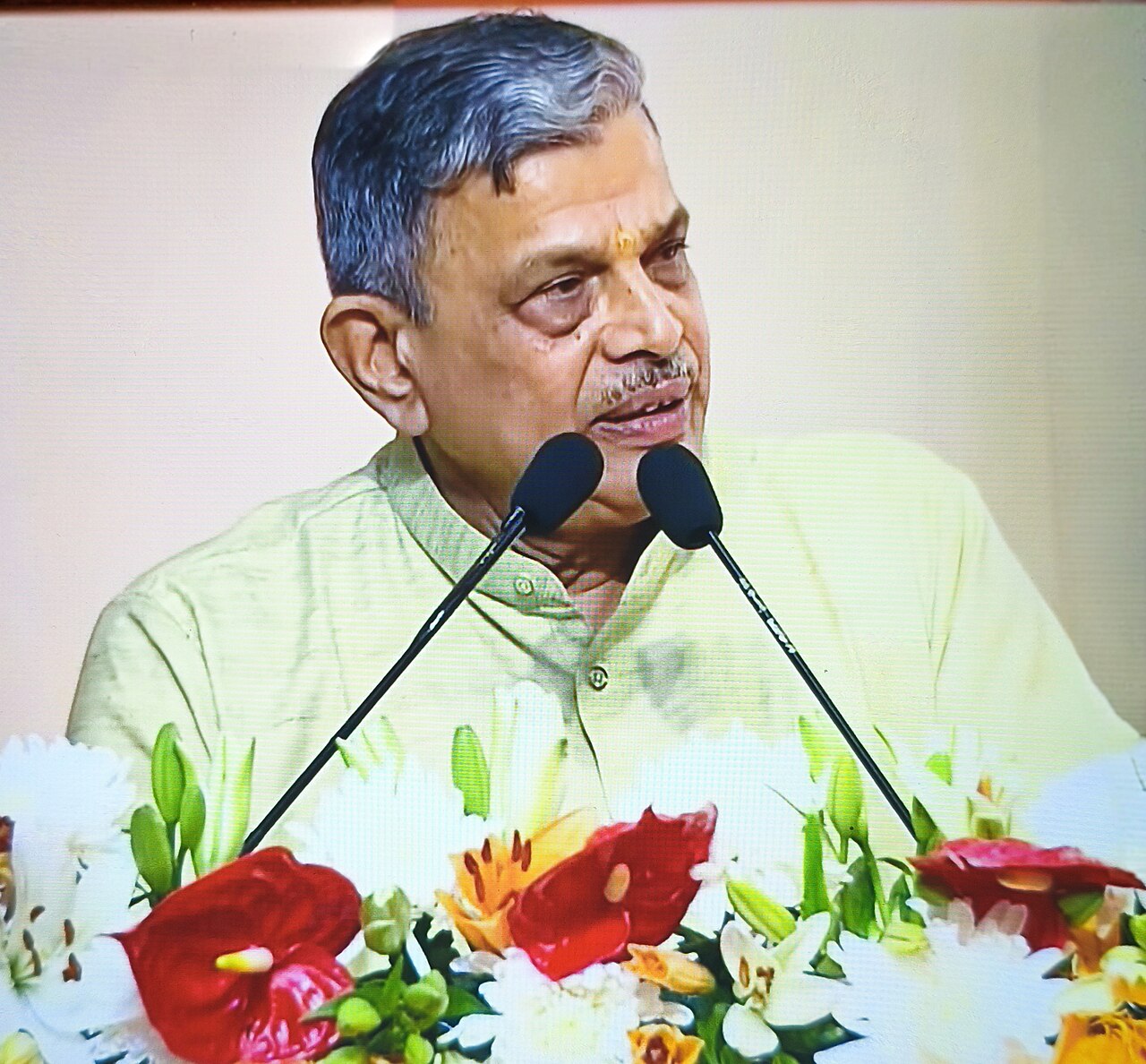
Dattatreya Hosabale, the national chief of the Rashtriya Swayamsevak Sangh (RSS — a large Hindu organization with millions of members across India), made a bold claim about the West Bengal assembly elections. He said that every Hindu voter who cast a ballot didn't just vote — they became workers fighting for a cause they believed in. This is strong language. It shows how seriously the RSS views elections in states like West Bengal, where Hindu-Muslim tensions have shaped politics for decades.
Hosabale wasn't just making a casual comment. He was speaking about what the RSS calls a “civilisational question” — meaning they see these elections as being about the very survival and identity of Hindu culture in India, not just about winning seats in a state assembly. This kind of messaging matters because it tells you how deep the RSS's commitment runs to certain political outcomes.
- Dattatreya Hosabale, RSS national chief, called West Bengal elections a “civilisational question” for Hindu voters
- RSS framing: Every Hindu voter transformed into an active worker fighting for their beliefs during the campaign
- Obstacles faced: The RSS claimed it encountered hurdles and attacks while carrying out its work for Hindu communities
- Regional impact: West Bengal, India's third-largest state, where Hindu-Muslim demographics have shaped electoral politics for 75+ years
- Broader vision: Hosabale advocated for people-to-people contact to improve India-Pakistan relations beyond just government talks
- Counter-narrative: The RSS leader dismissed calls to eradicate Sanatan Dharma (the RSS's term for Hindu religious and cultural traditions)
The RSS and Its Political Role in India
To understand what Hosabale said, you need to know who the RSS is. Think of it this way: if you have a political party, the RSS is something different — it's an organization that works behind the scenes, pushing ideas about Hindu culture and nationalism. The RSS doesn't directly contest elections, but its members often join the Bharatiya Janata Party (BJP), which is India's main Hindu-nationalist political party.
The RSS has been around since 1925 — that's almost 100 years. It has faced bans, accusations of violence, and constant criticism from people who say it promotes divisions between Hindus and other religions. But it has millions of supporters who believe the organization works to preserve Hindu traditions and values in a country where Hindus are the majority but where other religions also have deep roots and large populations.
In West Bengal specifically, elections are always tense. The state has a large Muslim population — about 27% of the total population. Hindu-Muslim relations matter every single election season. When Hosabale talks about a “civilisational question,” he's tapping into these deep, real anxieties that many Hindu voters feel about their community's future in the state.
What Hosabale Actually Said About the Elections
Here's what the RSS chief claimed about West Bengal voters during the assembly elections.
- Every Hindu voter became a Hindu worker: Hosabale said that Hindu voters didn't just mark their ballots and go home. They actively worked to spread the message, talk to neighbors, and mobilize their communities. This is political organizing language — turning passive voters into active campaigners.
- Civilisational framing: The elections weren't just about which party would run the state government. For the RSS, this was a battle over the identity and future of Hindu civilization itself in Bengal — a high-stakes spiritual and cultural war, not just politics.
- Obstacles and attacks: Hosabale claimed the RSS faced “hurdles and attacks” during its work for Hindu communities. He didn't give specific details, but this language suggests the organization believes it's being targeted or blocked by hostile forces — probably the state government or rival organizations.
- People-to-people diplomacy with Pakistan: In the same statement, Hosabale talked about improving India-Pakistan relations through direct contact between ordinary people, not just government negotiations. This was a softer message — showing the RSS isn't purely aggressive but also thinks about regional peace.
- Defense of Sanatan Dharma: Hosabale rejected calls to eliminate or remove what the RSS calls Sanatan Dharma — its term for eternal Hindu traditions and religious practices. He was basically saying: “You can't erase Hindu culture from India, and we will fight to preserve it.”
- Organizational commitment: The whole statement showed the RSS sees these elections as a moment where the organization's core mission — protecting and advancing Hindu interests — is directly at stake. This is not marginal for the RSS. This is central to who they are.
Why This Statement Matters Right Now
Hosabale's words reveal something important about Indian politics in 2026. The RSS is not a hidden group anymore. Its leaders speak publicly. Its ideas are mainstream in certain parts of India. When the RSS chief talks about elections as a civilisational battle, millions of Hindus listen and nod in agreement. At the same time, millions of other Indians — Muslims, Christians, Sikhs, and secular Hindus — hear the same words and feel worried about their own place in the country.
West Bengal matters because it's one of India's biggest states, home to 90 million people. It's also politically fragmented — no single party dominates. If Hindu-nationalist ideas gain ground there, it changes India's political map. If they don't, it proves there are limits to the RSS's influence outside their strongholds in central and northern India.
Here's what experts are actually saying: The RSS has grown bolder in claiming credit for electoral victories, even in states where many other factors matter more — local leadership, regional parties, economic issues, caste politics. By framing elections as civilisational battles, the RSS is trying to make people feel that voting for their preferred party isn't just politics — it's a moral and spiritual duty. This is powerful psychology, and it works on millions of voters.
But there's a catch. Not all Hindus agree with the RSS. Many Hindus in West Bengal vote for regional parties like the Trinamul Congress or the Communist parties. They don't see elections as civilisational wars. They see them as choices about jobs, schools, roads, and local leaders. When Hosabale says every Hindu voter became a worker, he's speaking for his own base — not for all Hindus.
How This Affects Ordinary People in West Bengal and Beyond
If you live in West Bengal, this RSS messaging directly touches your life in several ways.
First, it shapes how elections are fought. When large organizations frame elections as existential battles rather than routine political contests, campaigns become more intense, more emotional, and sometimes more violent. Communal tensions rise. Neighbors who vote differently might view each other with suspicion. For a Muslim family in a Hindu-majority neighborhood in Kolkata, these statements can feel like a warning. For a Hindu family in a Muslim-majority area, it can feel like a call to action.
Second, it affects government policy if the RSS-backed BJP wins. More emphasis on Hindu festivals in schools. More scrutiny of minority religious practices. Changes to history textbooks to emphasize Hindu heroism. These aren't just symbolic — they actually change what your children learn and how public resources are distributed.
Third, it encourages political polarization. When voters are told that elections are about civilisational survival, compromise becomes impossible. The other side isn't just wrong on policy — they're enemies of your religion and culture. This makes it harder to build consensus on everyday problems like water supply, garbage collection, or public transport.
For a farmer in rural Bengal, this might not directly affect crop prices. But it affects what local leaders talk about at rallies and what issues get attention. For a student in Kolkata applying for college, it affects whether admission policies stay merit-based or shift to other criteria the government prioritizes. For a small business owner, it affects whether government contracts go to favored businesses or are distributed fairly.
What to Watch For Next
Several things will reveal whether Hosabale's confidence in Hindu mobilization actually translates to real political power in West Bengal.
First, watch the next round of elections in the state. Will Hindu-nationalist parties make gains? Will the RSS claim victory and push for more influence? Or will West Bengal voters reject these appeals and stick with regional parties focused on local issues?
Second, pay attention to communal incidents. When political organizations talk about civilisational battles, communal violence sometimes follows. If there's an increase in Hindu-Muslim clashes or cases of vandalism against religious sites, it will prove that this rhetoric has real consequences on the ground.
Third, monitor how other Hindu leaders respond. Will leaders from different traditions disagree with the RSS framing? Will they argue that being Hindu doesn't require voting for one particular political side? If a counter-narrative emerges, it weakens the RSS's monopoly on speaking for all Hindus.
Fourth, track India-Pakistan relations. Hosabale mentioned people-to-people contact as a way to improve ties. If this becomes RSS policy, it could soften the organization's public image. Or it could be empty talk used to appear moderate while still pushing hard-line policies domestically.
Finally, watch West Bengal's development. The real test of any government is whether it delivers jobs, schools, and safety. If the next West Bengal government focuses on these basics rather than cultural wars, voters might feel less moved by civilisational rhetoric and more focused on results.
Frequently Asked Questions About RSS Politics in West Bengal
What exactly is the RSS, and why is it important?
The RSS is a 100-year-old Hindu nationalist organization with millions of members. It doesn't contest elections directly, but its members often join the BJP. The RSS shapes Hindu-nationalist ideology in India. When its chief speaks about elections, he's influencing millions of voters across the country.
What does “civilisational question” mean in Indian politics?
It means the RSS sees these elections as battles over the survival of Hindu culture itself — not just about which party wins power. This framing makes elections feel like life-or-death struggles rather than routine political contests. It motivates supporters to work harder and feel that voting is a moral duty.
How does RSS messaging affect Muslim voters and minorities?
When powerful organizations claim elections are civilisational battles, minorities often feel threatened. They worry about their safety, their rights, and their ability to practice their religion freely. This can drive minorities to unite behind parties that promise to protect them, which intensifies polarization.
Does the RSS actually control elections, or is it just talk?
The RSS has real influence through its members in the BJP and through its vast network of workers. But elections are also shaped by local issues, regional parties, economic conditions, and individual leaders. The RSS can't control everything, even in states where it's strong.
What happens if RSS-backed parties keep winning elections?
If the BJP wins consistently, the government will likely implement policies that promote Hindu nationalism — changes to education, celebrations of Hindu festivals in public institutions, scrutiny of minority religions, and rewriting of history. This doesn't happen overnight, but it happens slowly over years.